
DSM Help Methodology™
Patient Journey Map™
Follow the patient experience across discovery, consideration, decision, care, and long-term support.
Patient Pathway • Patient Experience & Care Coordination
The Framework
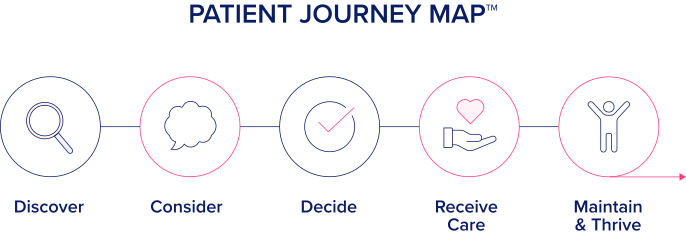
Patient Journey Map™ at a glance
See the patient pathway as one connected experience rather than a series of isolated encounters.
 Expand artwork
Why It Matters
Every transition can strengthen—or disrupt—the patient experience.
Patients encounter information, questions, decisions, handoffs, treatment, and follow-up across time. Mapping those moments together helps teams identify friction, clarify responsibilities, and improve continuity without reducing the journey to a single clinical encounter.
How It Works
Understand the framework.
01
Discover
Awareness begins.
- Patients become aware of a symptom, risk, problem, recommendation, or care option.
- Make accurate information findable and understandable.
- Identify how patients typically enter the pathway and where awareness gaps occur.
02
Consider
Questions and options take shape.
- Patients gather information and weigh concerns, barriers, and options.
- Support questions with clear, relevant education.
- Identify access, trust, cost, logistics, or understanding barriers that may affect the next step.
03
Decide
An informed next step is chosen.
- Support an appropriate decision about evaluation, treatment, referral, or another action.
- Clarify expectations, options, responsibilities, and next steps.
- Avoid pressure; preserve informed choice and appropriate clinical judgment.
04
Receive Care
The care experience is delivered and coordinated.
- Review access, handoffs, treatment, communication, and expectations.
- Clarify who owns each communication or coordination point.
- Close loops when multiple providers or teams participate.
05
Maintain & Thrive
Long-term support continues.
- Support follow-up, adherence, reassessment, and ongoing communication.
- Identify changing needs, barriers, or opportunities for continued care.
- Use patient experience and outcome evidence to improve the pathway over time.
Put It Into Practice
Use the framework in your work.
Use Patient Journey Map™ when your team needs a shared way to understand the current work and choose an appropriate next step.
- 1Choose one patient population or care pathway.
- 2Review observable evidence at each of the five journey stages.
- 3Identify the strongest part of the experience and the most important friction point.
- 4Choose one improvement action with a clear owner.
- 5Define what should change for the patient and how you will know.
- 6Review the handoff, communication, or follow-up needed to sustain the improvement.
What Good Looks Like
- Patients can find and understand appropriate information early in the pathway.
- Questions and barriers are addressed before they become avoidable drop-off points.
- Decisions are informed, appropriate, and supported without pressure.
- Handoffs and communication during care have clear ownership.
- Follow-up and reassessment are designed into the pathway rather than left to chance.
- Patient experience and workflow evidence are used to refine the journey.
Use Responsibly
The Patient Journey Map™ is a service and care-pathway improvement framework. It does not determine diagnosis, treatment eligibility, or individual clinical decisions. Protect patient privacy, use appropriate clinical judgment, and validate changes with real workflow and patient-experience evidence.
Explore the Methodology
Continue through the DSM Help Methodology™.
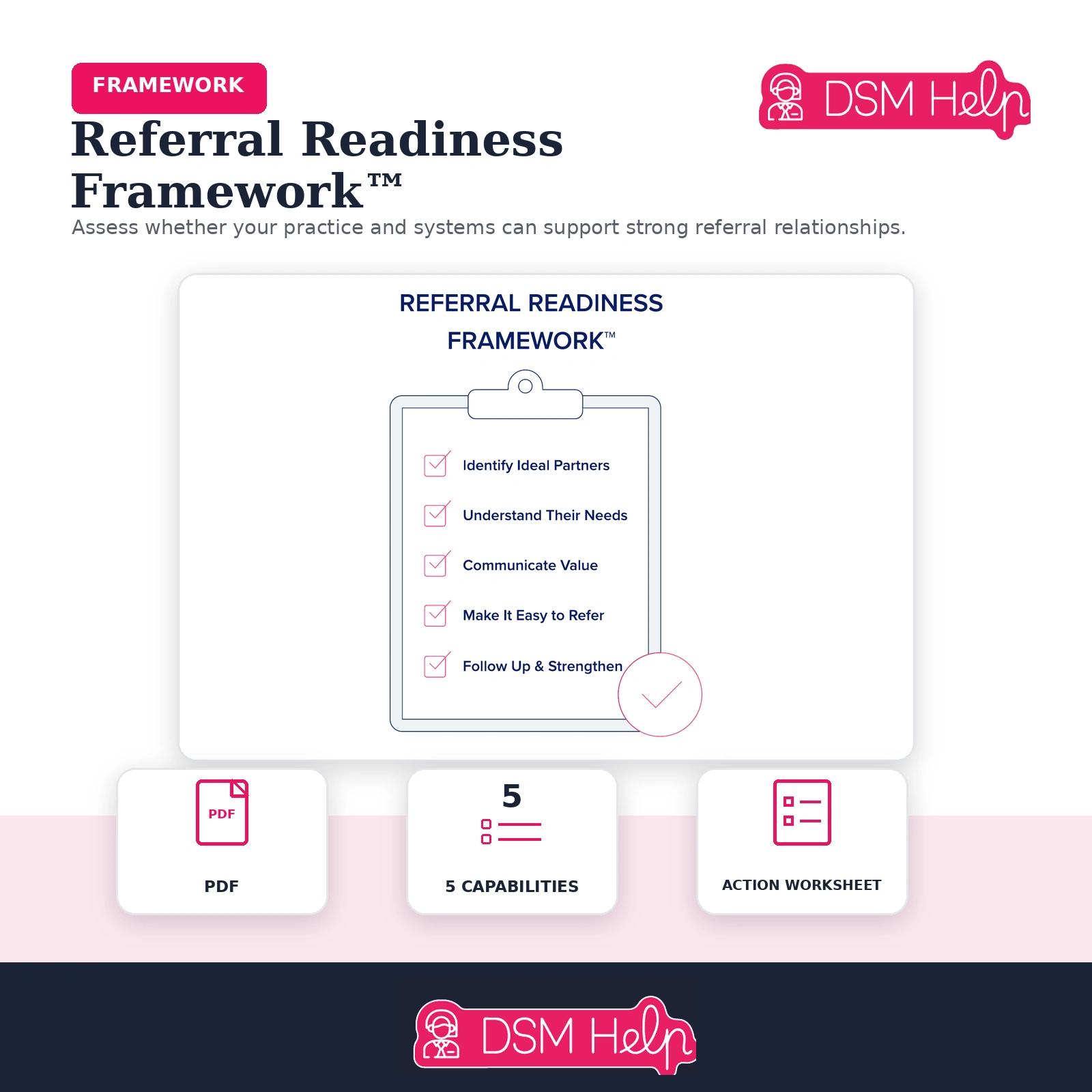
Referral Readiness Framework™
Assess whether your practice, team, communication, and systems are prepared to support strong referral relationships.
Categories: Referral Readiness and Implementation
Audiences: DSM Practice Leaders, Sleep Coordinators, DSM Office Teams
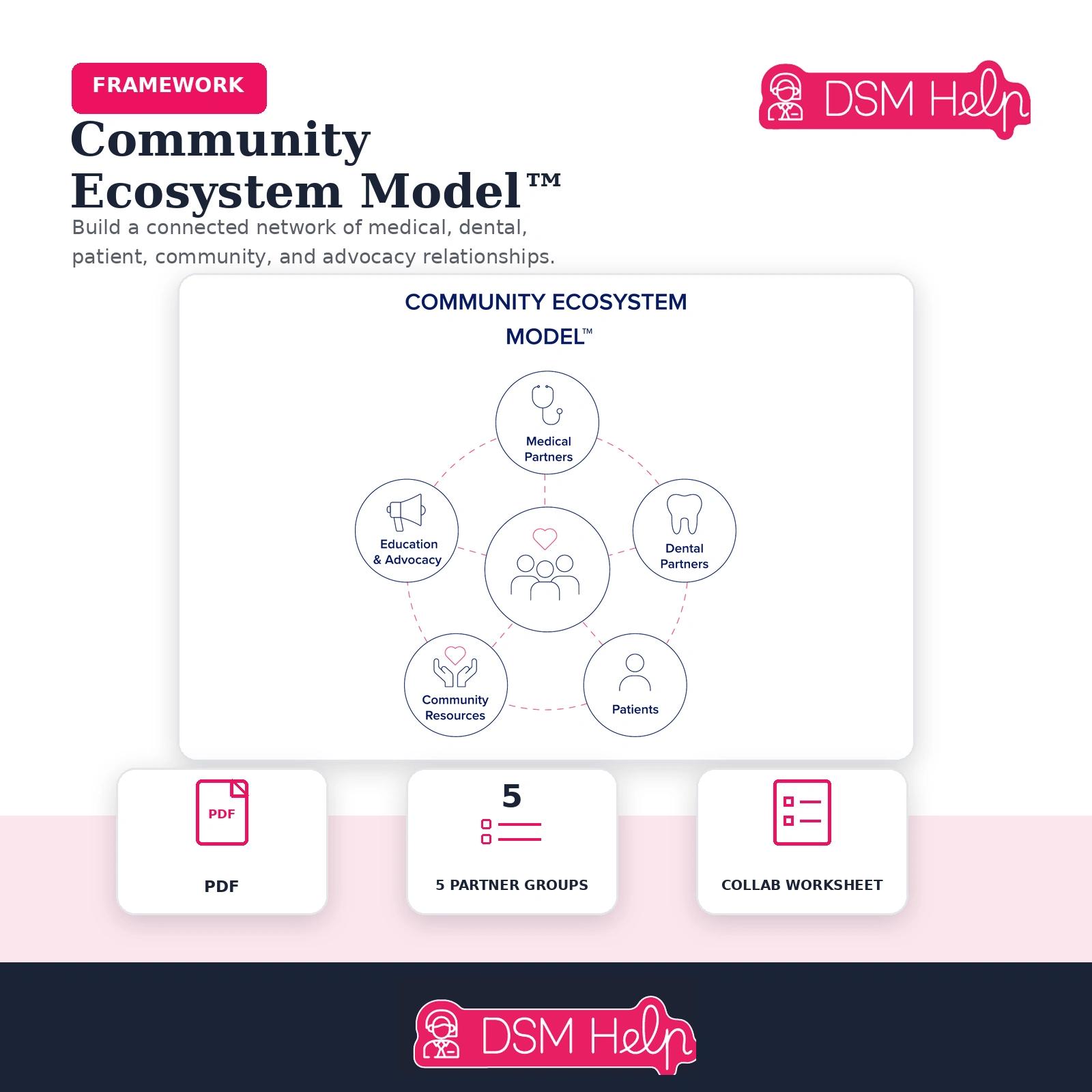
Community Ecosystem Model™
See how dental, medical, patient, community-resource, and education relationships connect to support broader collaboration and patient care.
Categories: Patient and Community Impact
Audiences: DSM Practice Leaders, Sleep Coordinators, DSM Office Teams, Healthcare Partners, Industry Partners
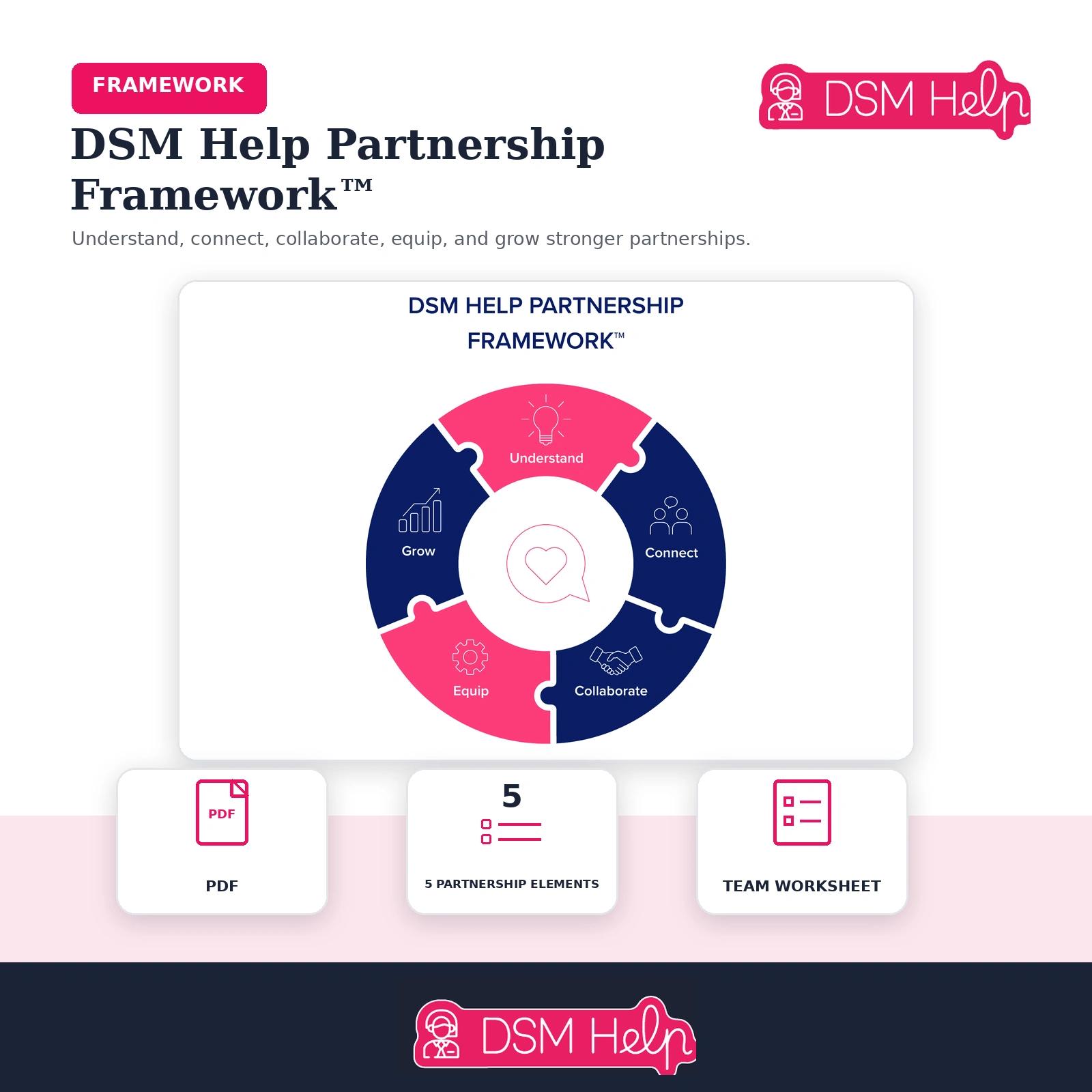
DSM Help Partnership Framework™
A five-part framework that helps teams build stronger, more useful partnerships through understanding, connection, collaboration, practical support, and growth.
Categories: Core Methodology
Audiences: DSM Practice Leaders, Sleep Coordinators, DSM Office Teams, Healthcare Partners, Industry Partners
Start the Conversation
Ready to strengthen the patient journey?
Improve the next step without losing sight of the whole pathway.