
DSM Help Methodology™
DSM Help Partnership Framework™
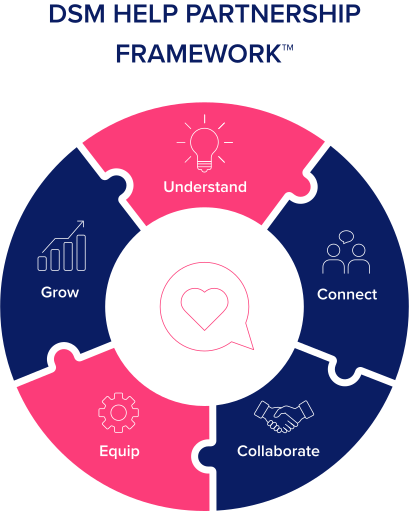
A five-part framework that helps teams build stronger, more useful partnerships through understanding, connection, collaboration, practical support, and growth.
Partnership Development • Collaboration • Implementation
The Framework
DSM Help Partnership Framework™ at a glance
A reinforcing cycle, not a rigid sequence.
 Expand artwork
Why It Matters
Strong partnerships are built through more than goodwill.
The DSM Help Partnership Framework™ helps teams create a shared understanding, establish meaningful connection, collaborate around real work, equip people to act, and use evidence to grow the relationship and its impact.
Outcomes That Matter
Stronger Partner Relationships
Clearer Coordinated Action
Greater Shared Capability
Sustainable Value and Better Outcomes
How It Works
Five components. One reinforcing partnership cycle.
The five components strengthen one another. Teams may begin wherever the partnership has the clearest need, then continue moving among understanding, connection, collaboration, practical support, and growth.
01
Understand
Learn what matters to the provider, team, patient, or partner before deciding what support is useful.
02
Connect
Build meaningful contact through relevant communication, shared purpose, and consistent follow-through.
03
Collaborate
Work together around clear roles, shared needs, patient-centered goals, and useful next steps.
04
Equip
Provide practical education, resources, tools, and support that make action easier.
05
Grow
Measure what matters, strengthen what is working, and continue developing the partnership over time.
Put It Into Practice
Use the framework to strengthen a partnership.
Use the DSM Help Partnership Framework™ when starting, reviewing, repairing, or expanding a partnership. Name the partnership outcome, assess the five components using observable evidence, and choose the smallest action that will strengthen the cycle now.
- 1Name the partnership, participants, and shared outcome being reviewed.
- 2Assess each component using observable evidence, not assumption.
- 3Identify the component or connection creating the greatest friction.
- 4Choose one partnership action, owner, measure, and follow-up date.
- 5Review partner feedback, actions, capability, and results; then strengthen the next component.
What Good Looks Like
- Shared purpose, mutual value, and clear roles.
- Communication is consistent, respectful, and responsive.
- Decisions, roles, handoffs, and follow-through are clear.
- Partners have the tools, information, and support to act.
- Evidence and feedback improve partnership value over time.
Partnership Principles
Purpose-Driven • Mutual • Clear • Practical • Adaptive
Measure What Matters
Shared Understanding • Connection and Engagement • Collaborative Action • Tool and Resource Use • Results and Partnership Growth
Use Responsibly
Use the framework to strengthen ethical, mutually valuable partnerships. It does not replace contracts, clinical judgment, legal review, privacy requirements, professional standards, or organization-specific policies. Do not use partnership goals to pressure referrals, compromise patient choice, or create inappropriate influence.
Keep Going
Resources that support this framework.
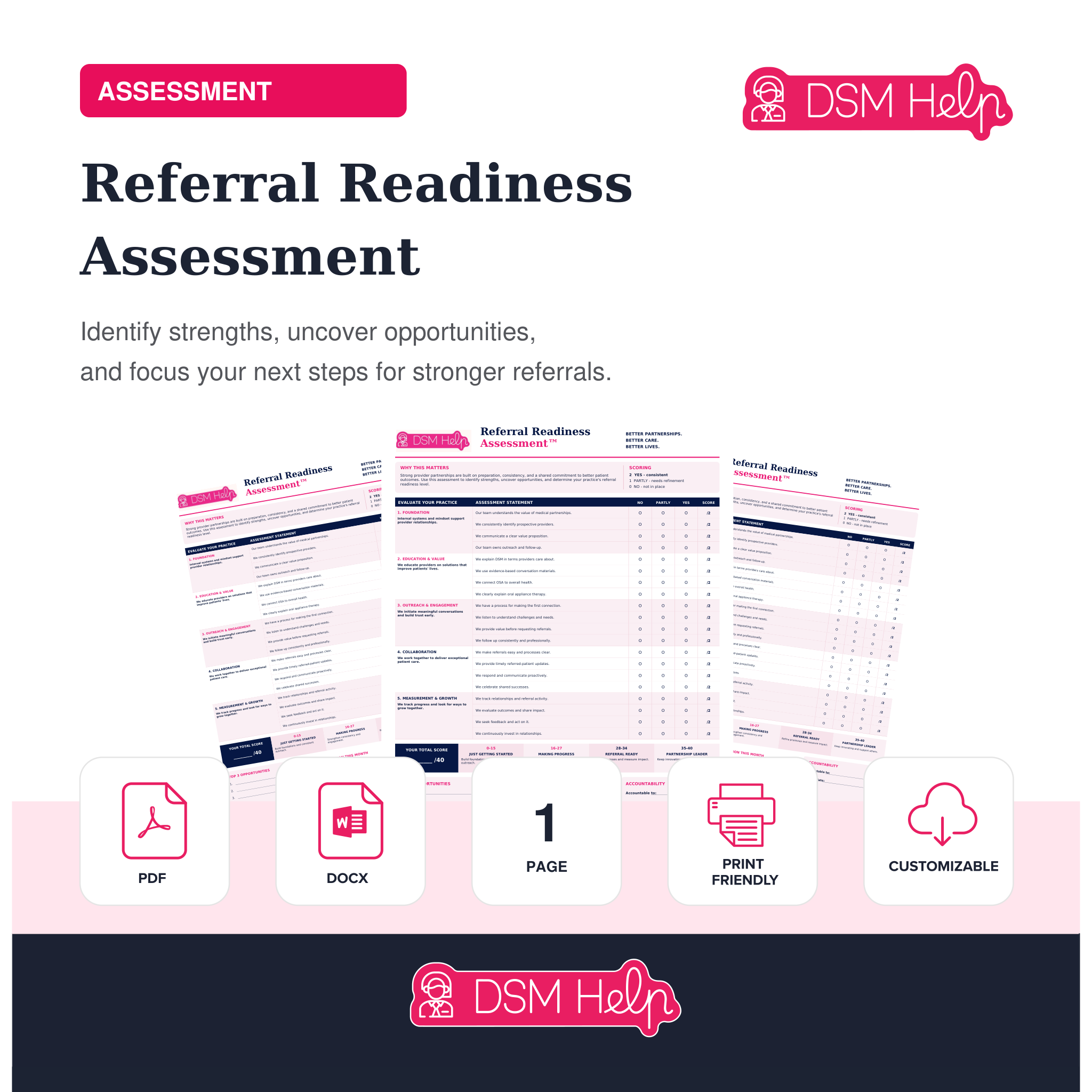
Referral Readiness Assessment™ — Printable Edition
Printable Edition v1.2. An assessment tool for reviewing how prepared a practice is to support medical referrals, provider communication, and follow-through.
Categories: Referral Readiness and Implementation
Audiences: DSM Practice Leaders, Sleep Coordinators, DSM Office Teams
Explore the Methodology
Continue through the DSM Help Methodology™.
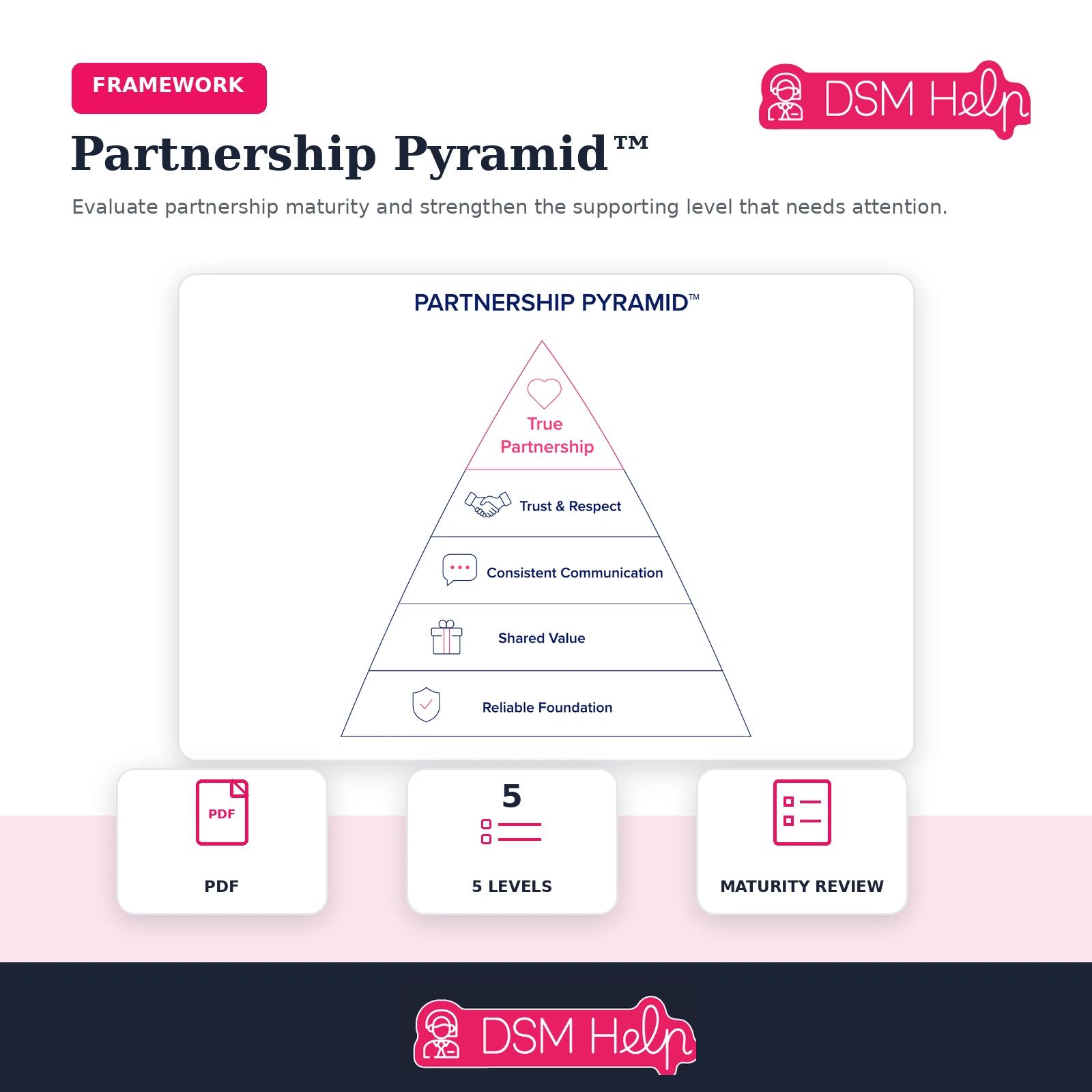
Partnership Pyramid™
Evaluate the maturity and strength of a provider partnership by examining the conditions that support it from the foundation upward.
Categories: Provider Relationships
Audiences: DSM Practice Leaders, Sleep Coordinators, DSM Office Teams, Healthcare Partners
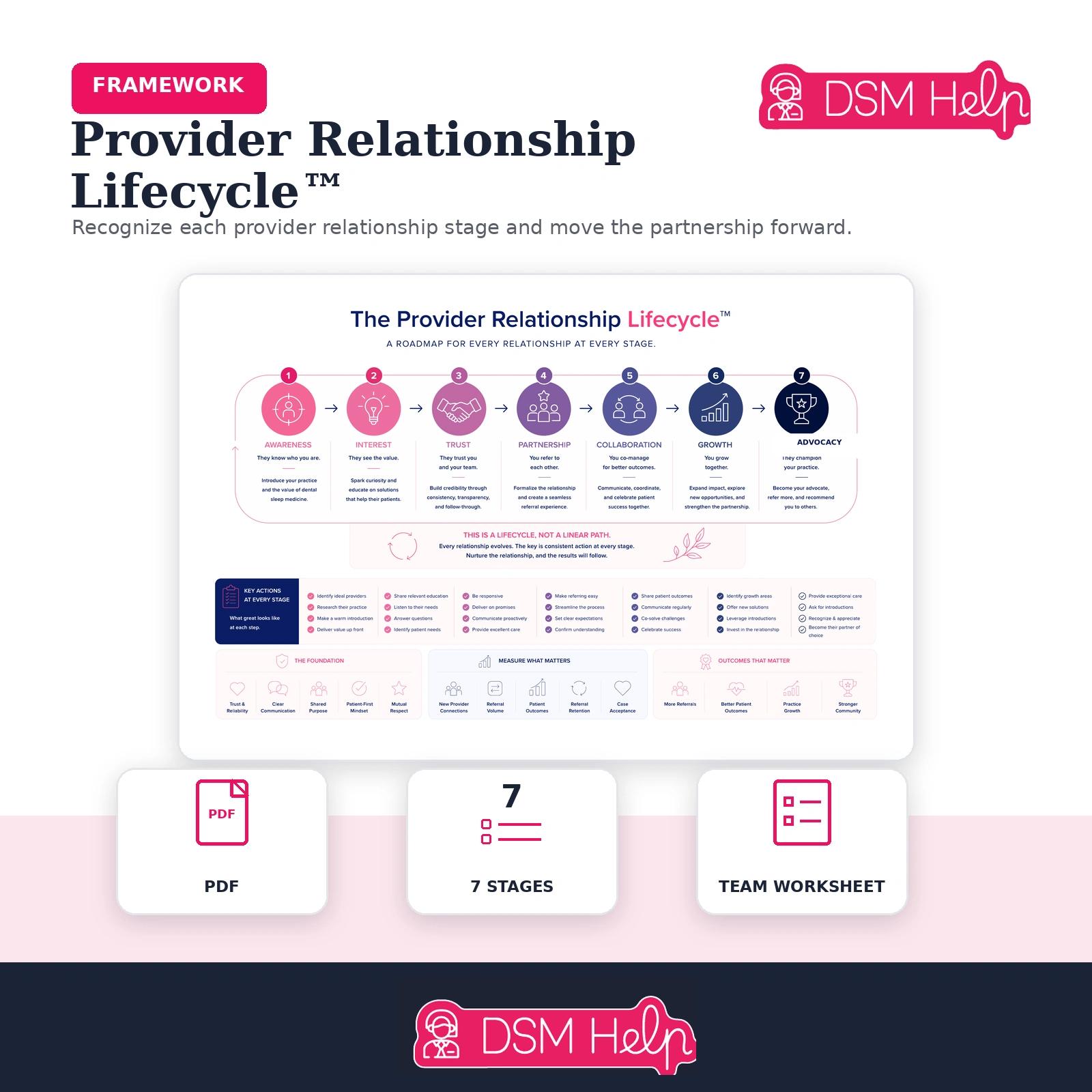
Provider Relationship Lifecycle™
Understand how provider relationships develop over time and identify the right approach for each stage of the partnership.
Categories: Provider Relationships
Audiences: DSM Practice Leaders, Sleep Coordinators, DSM Office Teams
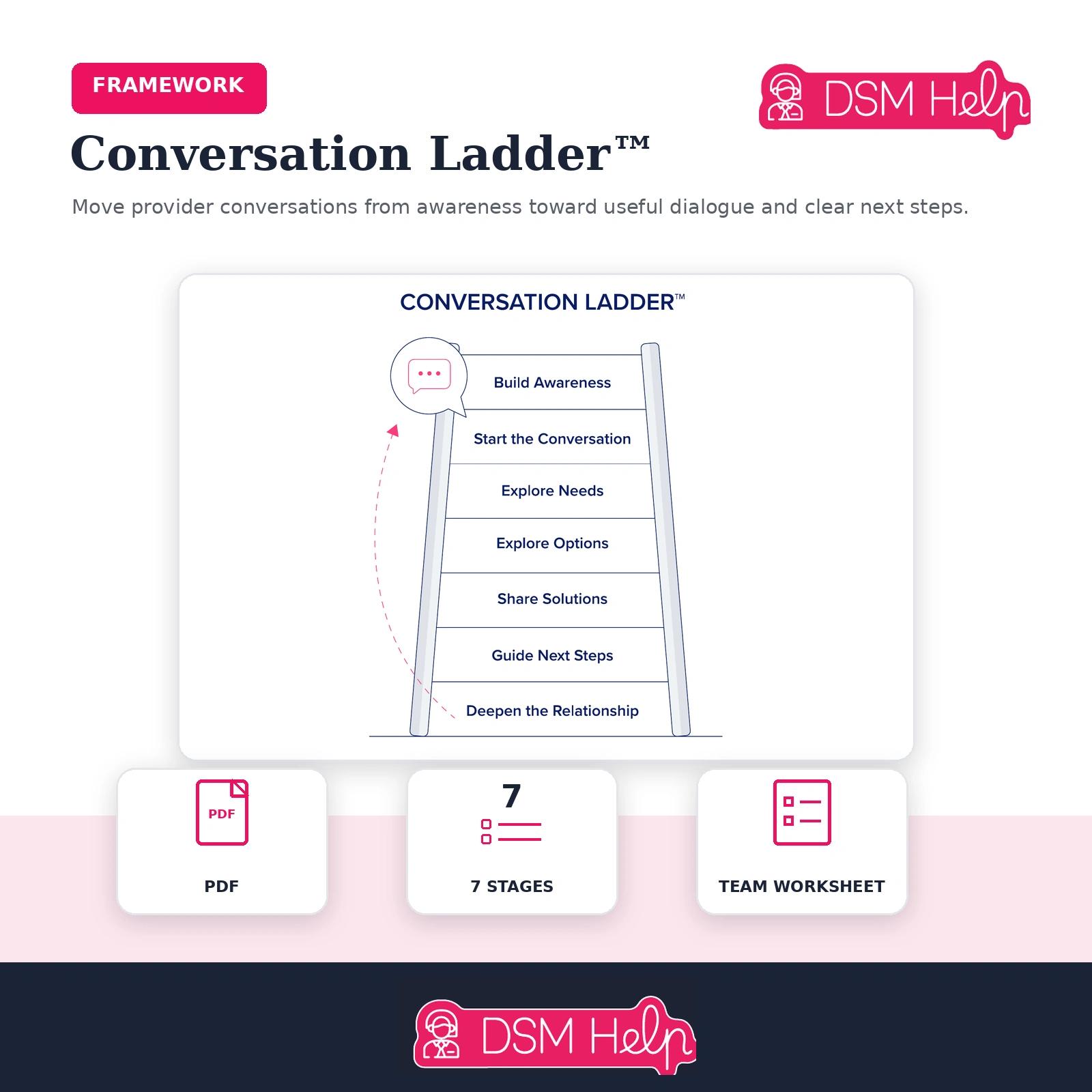
Conversation Ladder™
Move provider conversations from initial awareness toward greater understanding, useful dialogue, clear next steps, and stronger relationships.
Categories: Provider Relationships
Audiences: DSM Practice Leaders, Sleep Coordinators, DSM Office Teams, Industry Partners
Start the Conversation
Ready to put these ideas into practice?
Every stronger partnership begins with a meaningful conversation.