
DSM Help Methodology™
Referral Readiness Framework™
Assess whether your practice, team, communication, and systems are prepared to support strong referral relationships.
Referral Readiness • Provider Partnerships • Practice Systems
The Framework
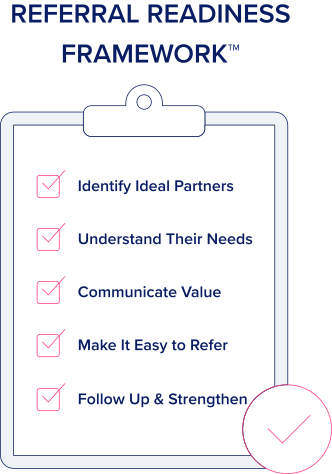
Referral Readiness Framework™ at a glance
Readiness is the ability to support the relationship reliably before, during, and after a referral.
 Expand artwork
Why It Matters
A referral request is not a referral system.
Strong provider partnerships depend on preparation, consistency, clear communication, useful value, and reliable follow-through. The Referral Readiness Framework™ helps a practice determine whether the relationship can be supported well before increasing outreach or referral expectations.
How It Works
Understand the framework.
01
Identify Ideal Partners
Focus relationship-building where there is meaningful fit.
- Define relevance by shared patient population or care-coordination need
- Consider strategic fit, patient benefit, communication feasibility, and practice capacity
- Select a manageable number of priority relationships with a named owner
02
Understand Their Needs
Learn before assuming.
- Ask about provider priorities, patient needs, workflow realities, communication preferences, and barriers
- Listen for what would make coordination easier or more useful
- Document needs before deciding what resource, education, or next step fits
03
Communicate Value
Explain why the relationship is useful.
- Connect DSM education, services, communication, or resources to needs the provider has actually expressed
- Use concise, evidence-informed, role-appropriate language
- Avoid guarantees, unsupported claims, or generic information that does not address the stated need
04
Make It Easy to Refer
Reduce avoidable friction.
- Clarify referral criteria, contact pathways, required information, and ownership
- Define acknowledgment, scheduling, handoff, status-update, and closed-loop communication steps
- Test the workflow before expanding outreach
05
Follow Up & Strengthen
Make reliability visible over time.
- Complete commitments by the agreed date
- Close communication loops and provide useful follow-up
- Seek feedback, repair process gaps, and continue investing in relationship touchpoints that have a reason
Put It Into Practice
Use the framework in your work.
Framework + Assessment + Action — Use DSM-PUB-037 to diagnose readiness across Foundation, Education & Value, Outreach & Engagement, Collaboration, and Measurement & Growth. Use FW-006 to organize the five relationship-building capabilities. Choose one practical improvement, assign an owner, and set a review date.
Use Referral Readiness Framework™ when your team needs a shared way to understand the current work and choose an appropriate next step.
- 1Review current readiness using evidence, not assumptions.
- 2Identify the strongest capability and the highest-priority gap.
- 3Choose one improvement the team can reliably complete.
- 4Assign an owner, due date, and evidence of completion.
- 5Recheck readiness before expanding outreach or referral expectations.
What Good Looks Like
- Priority partners are selected for fit, not only estimated volume.
- Provider needs are documented before solutions are offered.
- Value is relevant, accurate, and deliverable.
- Referral steps are clear, usable, and owned.
- Commitments and updates are completed reliably.
- Feedback changes the process when needed.
Use Responsibly
Referral readiness is broader than referral volume. Use the framework to improve preparation, communication, workflow reliability, follow-through, and the patient experience. Do not use readiness scores to pressure provider relationships or imply guaranteed referrals or outcomes.
Keep Going
Resources that support this framework.
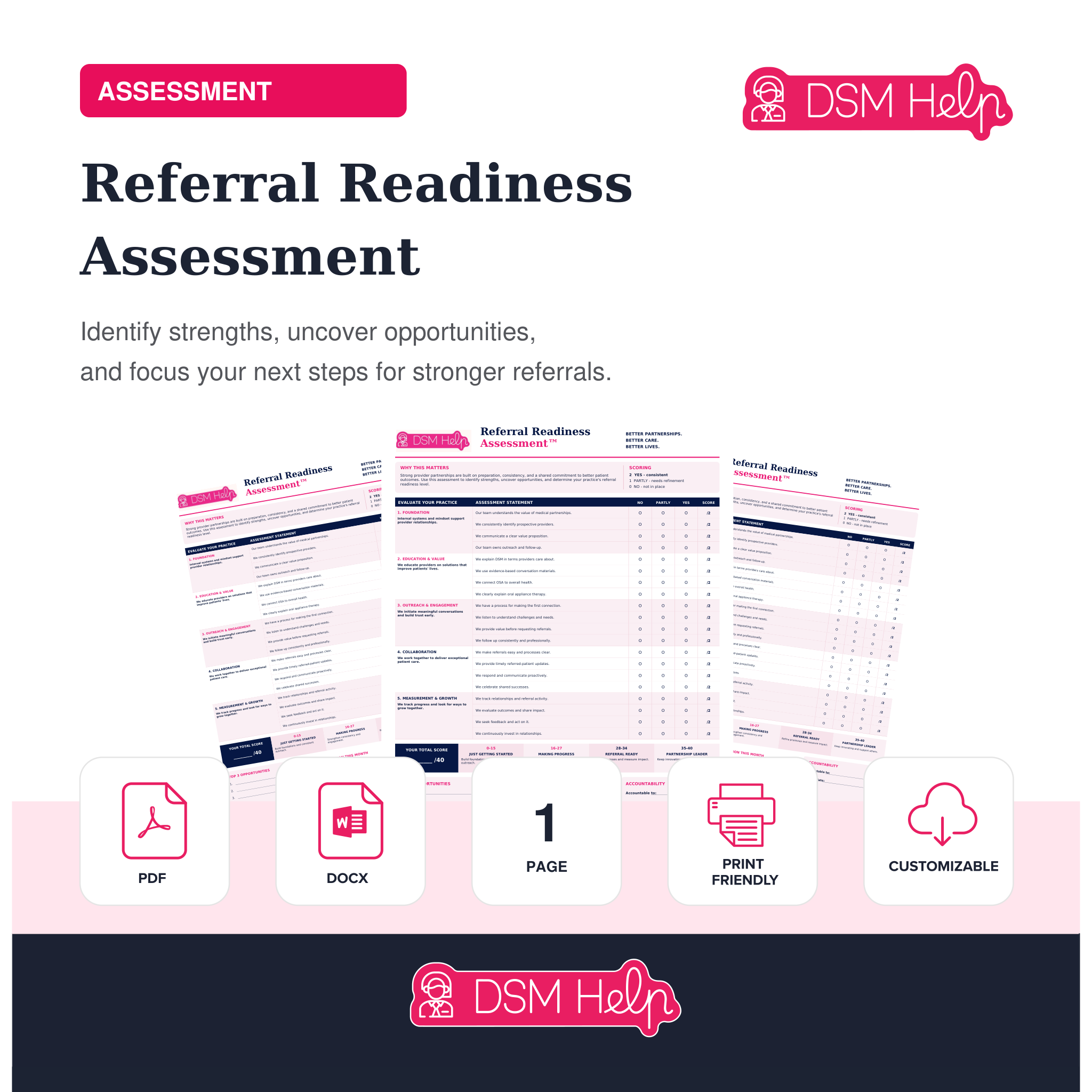
Referral Readiness Assessment™ — Printable Edition
Printable Edition v1.2. An assessment tool for reviewing how prepared a practice is to support medical referrals, provider communication, and follow-through.
Categories: Referral Readiness and Implementation
Audiences: DSM Practice Leaders, Sleep Coordinators, DSM Office Teams
Explore the Methodology
Continue through the DSM Help Methodology™.
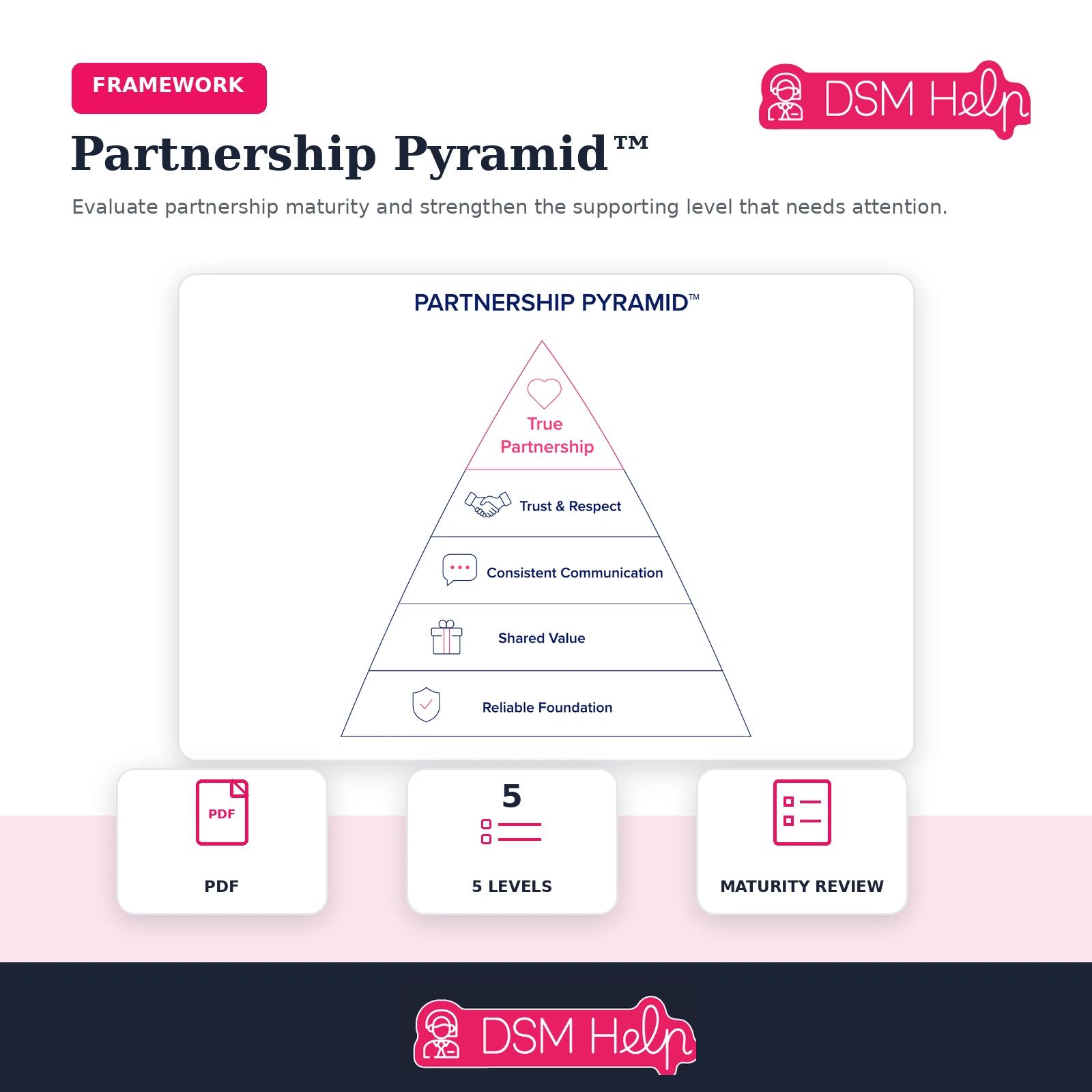
Partnership Pyramid™
Evaluate the maturity and strength of a provider partnership by examining the conditions that support it from the foundation upward.
Categories: Provider Relationships
Audiences: DSM Practice Leaders, Sleep Coordinators, DSM Office Teams, Healthcare Partners
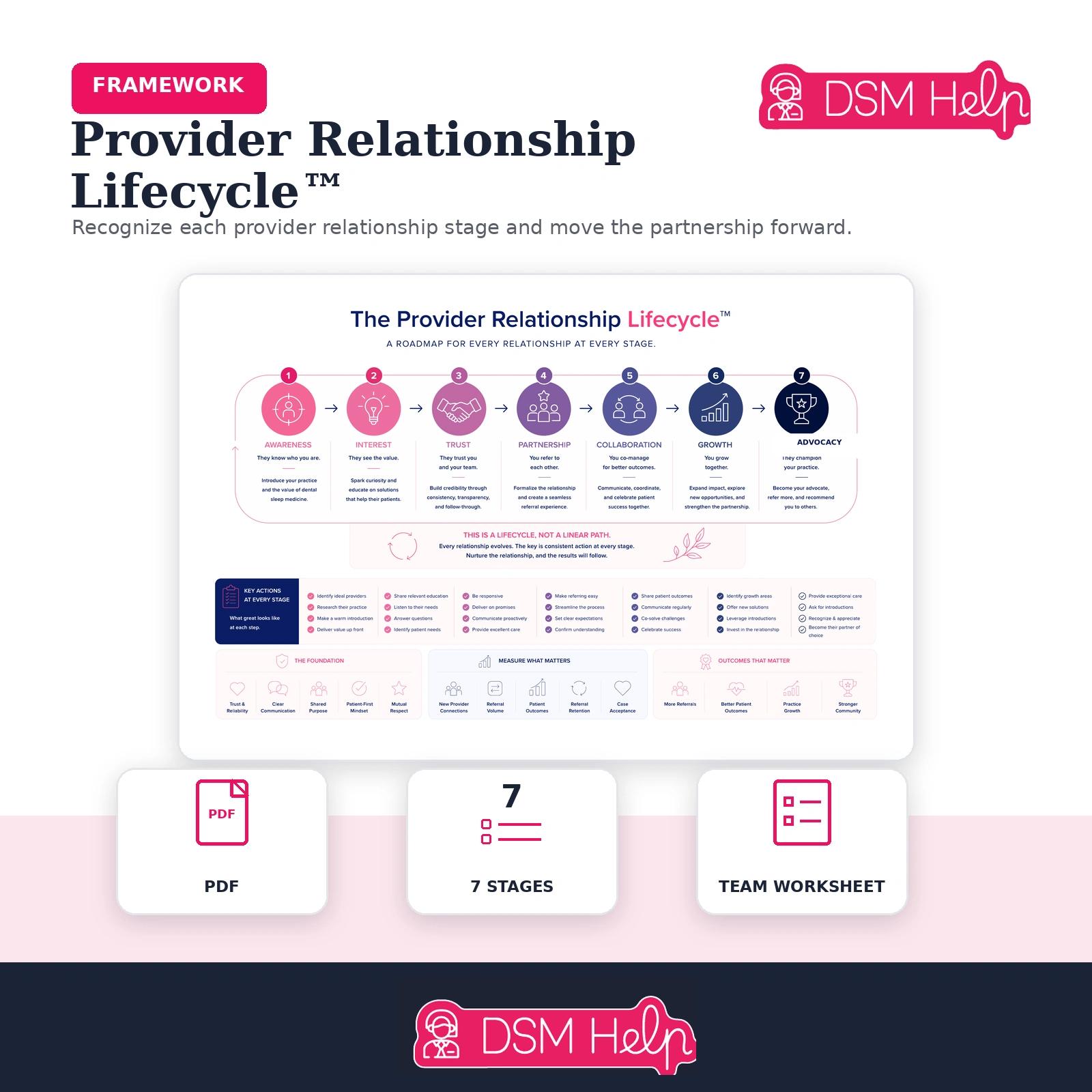
Provider Relationship Lifecycle™
Understand how provider relationships develop over time and identify the right approach for each stage of the partnership.
Categories: Provider Relationships
Audiences: DSM Practice Leaders, Sleep Coordinators, DSM Office Teams
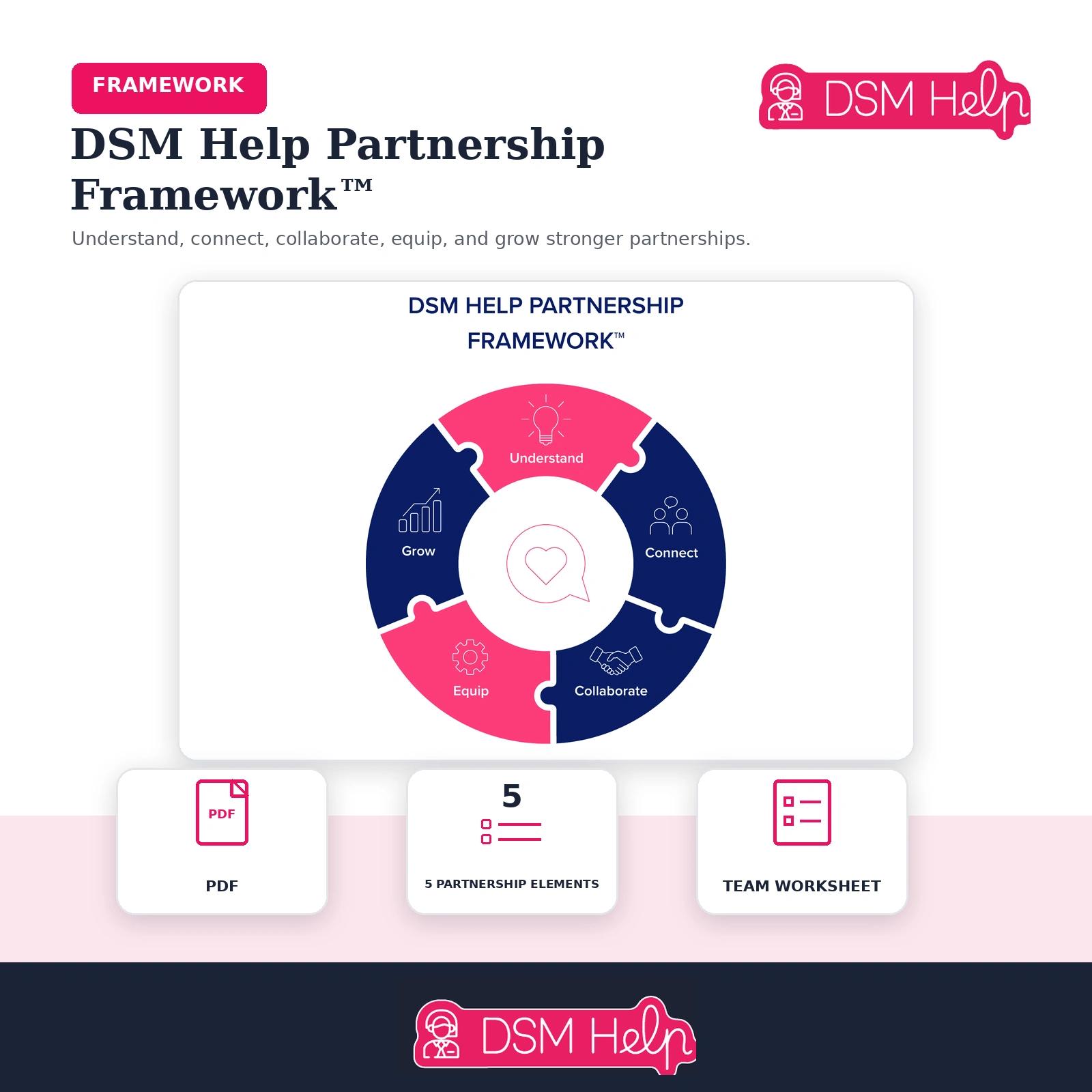
DSM Help Partnership Framework™
A five-part framework that helps teams build stronger, more useful partnerships through understanding, connection, collaboration, practical support, and growth.
Categories: Core Methodology
Audiences: DSM Practice Leaders, Sleep Coordinators, DSM Office Teams, Healthcare Partners, Industry Partners
Start the Conversation
Ready to strengthen referral readiness?
Build the system that makes stronger partnerships easier to support.