DSM Help Methodology™
Community Ecosystem Model™
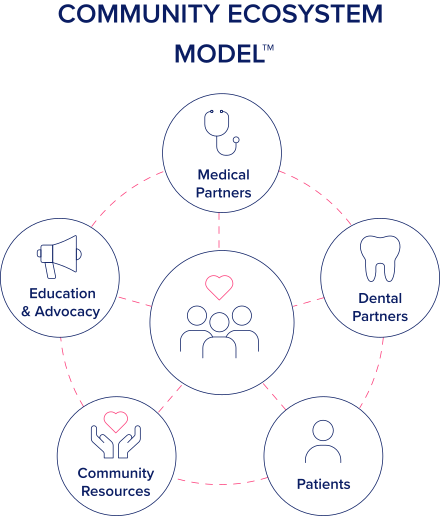
See how dental, medical, patient, community-resource, and education relationships connect to support broader collaboration and patient care.
Community Collaboration • Patient-Centered Ecosystem
The Framework
Community Ecosystem Model™ at a glance
Stronger community collaboration connects people, providers, resources, and education around shared needs.
 Expand artwork
Why It Matters
Patients move through communities, not isolated organizations.
Medical and dental care, patient needs, community resources, and education can affect one another. The Community Ecosystem Model™ helps teams see those relationships together so collaboration can be designed around useful connections rather than disconnected outreach.
How It Works
Understand the framework.
Medical Partners
Connect clinical expertise and care coordination.
- Identify medical relationships relevant to the shared objective.
- Understand each partner’s role in the patient pathway.
- Create communication that supports appropriate coordination and closed loops.
Dental Partners
Connect oral-health and DSM capabilities.
- Clarify how dental partners contribute to the shared objective.
- Define communication and coordination responsibilities.
- Make handoffs and follow-through understandable to partners and patients.
Patients
Keep access and experience central.
- Identify what patients need to understand, navigate, access, and experience.
- Look for friction between parts of the ecosystem.
- Use patient needs as a test of whether collaboration is actually useful.
Community Resources
Extend support beyond clinical offices.
- Identify organizations, services, support systems, and local resources relevant to the objective.
- Clarify what each resource can appropriately provide.
- Make resource information accurate and usable.
Education & Advocacy
Build shared understanding and awareness.
- Use accurate, audience-appropriate education.
- Support informed conversations and appropriate awareness.
- Connect education and advocacy to real resources and care pathways rather than unsupported claims.
Put It Into Practice
Use the framework in your work.
Use Community Ecosystem Model™ when your team needs a shared way to understand the current work and choose an appropriate next step.
- 1Define one shared patient or community objective.
- 2Map the relevant people, providers, resources, and education around it.
- 3Identify where coordination is already strong.
- 4Find the missing or weak connection most likely to affect the objective.
- 5Choose one collaborative action with a clear owner and follow-up.
- 6Review what became more useful and adjust the ecosystem.
What Good Looks Like
- The shared objective is explicit before partners or resources are added.
- Each ecosystem participant has a relevant role rather than being included for visibility alone.
- Patients can understand and navigate the connections that affect them.
- Communication and handoffs are owned where coordination is required.
- Education and advocacy point toward accurate information and appropriate resources.
- Feedback changes the ecosystem when a connection is not useful.
Use Responsibly
Community collaboration should support patient access, understanding, coordination, and appropriate care. Respect professional roles, patient privacy, clinical judgment, and organizational boundaries. Do not treat community relationships as a mechanism for pressuring referrals or making unsupported outcome claims.
Explore the Methodology
Continue through the DSM Help Methodology™.
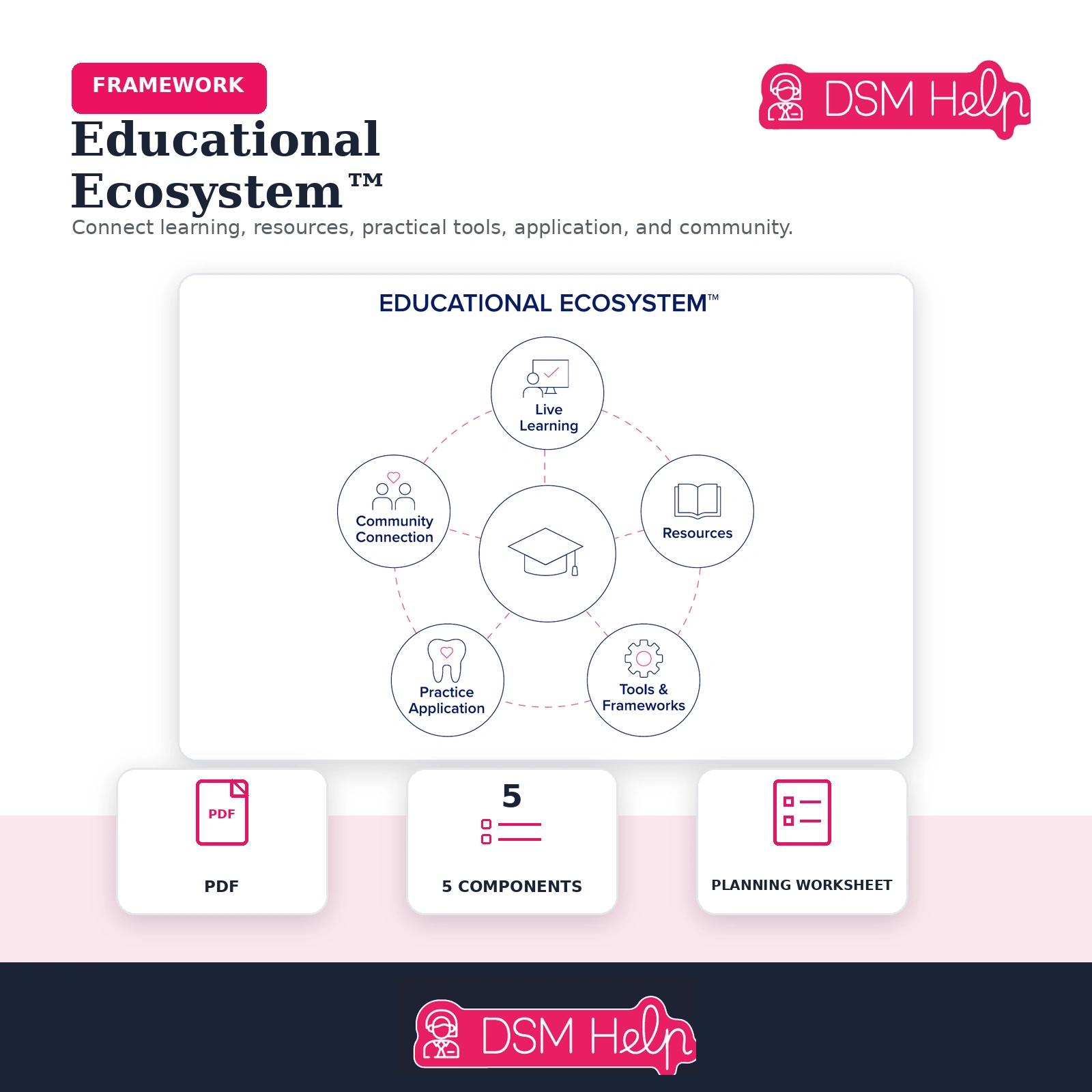
Educational Ecosystem™
Use coordinated education to support providers, teams, patients, and partners throughout the relationship-building process.
Categories: Education and Engagement
Audiences: DSM Practice Leaders, Sleep Coordinators, DSM Office Teams, Industry Partners
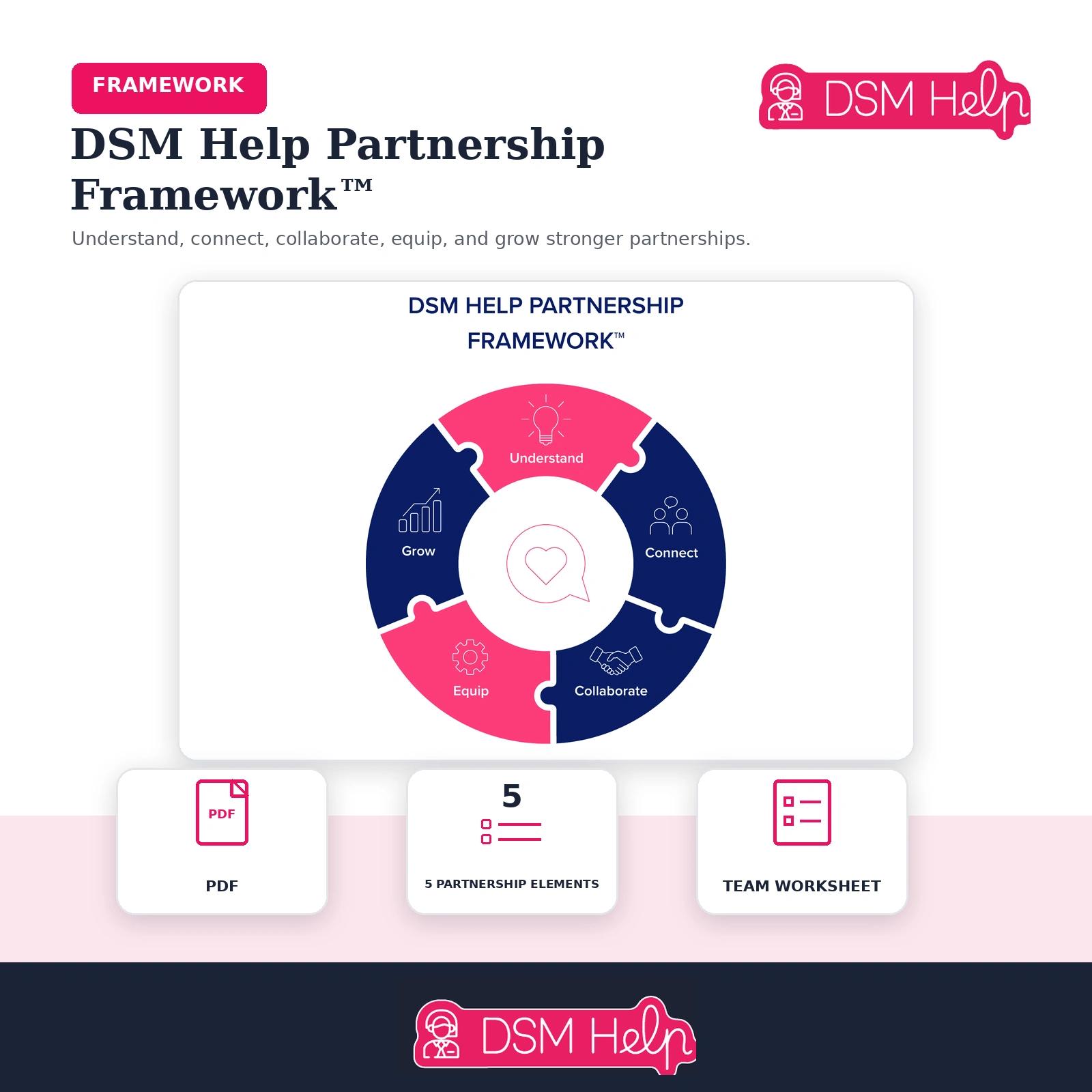
DSM Help Partnership Framework™
A five-part framework that helps teams build stronger, more useful partnerships through understanding, connection, collaboration, practical support, and growth.
Categories: Core Methodology
Audiences: DSM Practice Leaders, Sleep Coordinators, DSM Office Teams, Healthcare Partners, Industry Partners
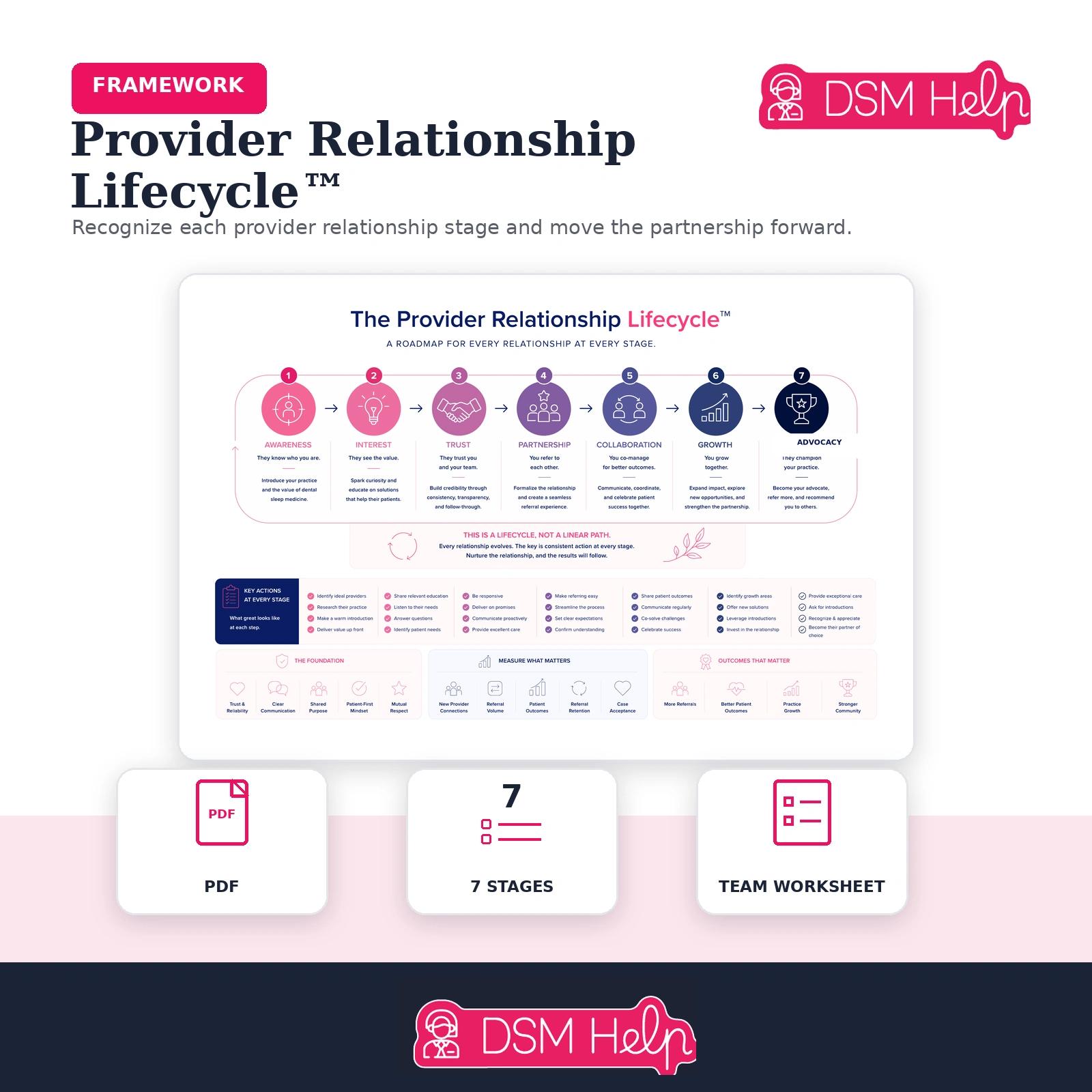
Provider Relationship Lifecycle™
Understand how provider relationships develop over time and identify the right approach for each stage of the partnership.
Categories: Provider Relationships
Audiences: DSM Practice Leaders, Sleep Coordinators, DSM Office Teams
Start the Conversation
Ready to strengthen your community ecosystem?
Build the connection that makes collaboration more useful.