Insight
The Update That Makes Medical Dental Collaboration Easier
Give medical and dental teams a shared view of what has happened, what remains open and who is handling the next step.
Published November 1, 2026
Medical and dental teams can be working diligently on the same patient’s care while holding different pictures of the process. One office knows an appliance was delivered. Another is waiting for an evaluation update. The patient may assume the two teams have already spoken.
A useful update brings those pictures together. It tells the receiving clinician what has happened, what remains unresolved and whether a response is needed.
Keep clinical roles visible
The AADSM’s 2025 standards describe dental sleep medicine care as collaborative work between qualified dentists and medical providers. They identify medical-provider responsibility for diagnosis and describe referral back to the medical provider for verification of treatment efficacy and long-term follow-up. [1]
An office workflow should make those responsibilities visible. Delivery of an appliance is a milestone; the communication plan should also show the remaining clinical follow-up. This article addresses communication design, not individual treatment selection.
Give each update a clear purpose
Organize the message around four questions: Why are we sending this? What has happened? What remains open? What, if anything, do we need from the receiving team?
A consultation update and a request for additional information serve different purposes. Label the purpose plainly. Distinguish a completed appointment from a scheduled appointment, and a clinical recommendation from a task that has already occurred. Use the practice’s established secure channel for patient-specific information.
Track the response as well as the message
Sending information does not establish that an unresolved issue has been addressed. If the update asks for action, assign someone to check for the response and document what happens next.
Suppose a patient has completed a dental visit and needs the next medical step arranged. The update should identify the relevant milestone and request, while the internal task should identify who will check that the process continues. The clinical teams determine the appropriate timing and requirements.
Agree on a repeatable approach
Ask partner offices which milestones warrant an update and what information makes their work easier. Test a concise format together, then revise it when the receiving team identifies a gap.
Useful collaboration does not require every office to use the same software. It requires a shared understanding of the patient’s current position, the work that remains and the person responsible for moving the next step forward.
Related content
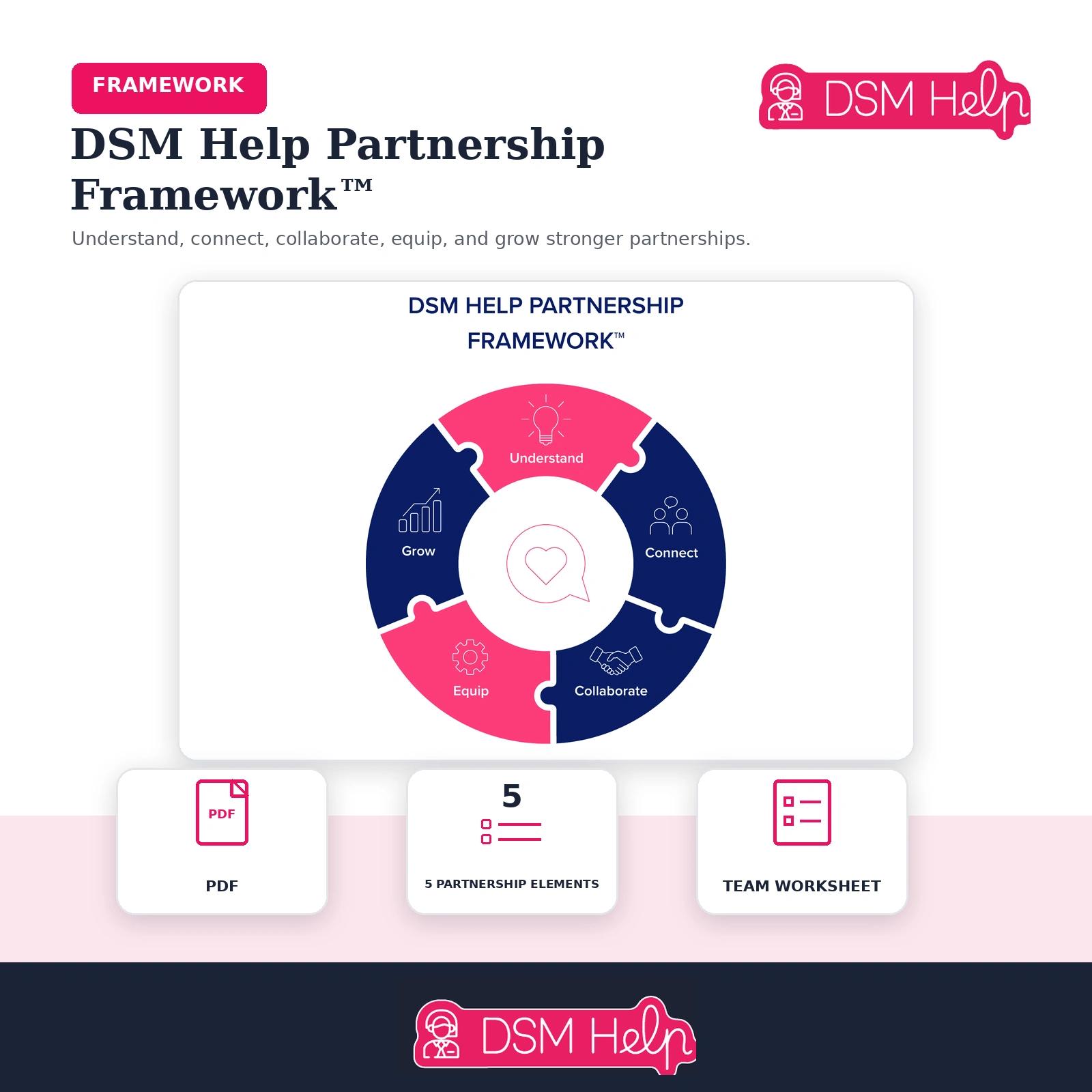
DSM Help Partnership Framework™
A five-part framework that helps teams build stronger, more useful partnerships through understanding, connection, collaboration, practical support, and growth.
Categories: Core Methodology
Audiences: DSM Practice Leaders, Sleep Coordinators, DSM Office Teams, Healthcare Partners, Industry Partners
Start Here
Ready to take the next step?
Every meaningful partnership begins with a conversation.