
DSM Help Methodology™
Partnership Flywheel™
Build momentum through consistent relationship development, useful value, follow-through, and shared growth.
Continuous Partnership Growth • Relationship Momentum
The Framework
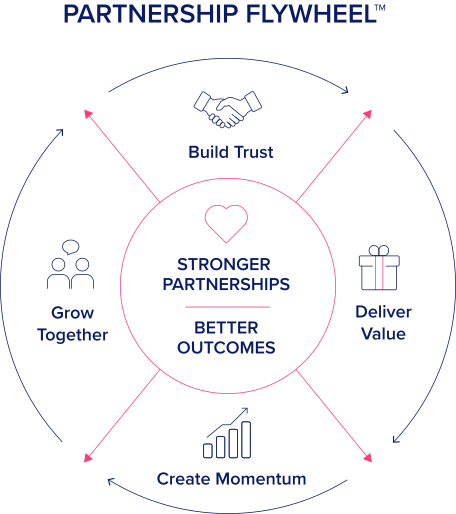
Partnership Flywheel™ at a glance
Stronger partnerships create better outcomes when useful actions keep the relationship moving.
 Expand artwork
Why It Matters
Partnership growth is continuous, not one-and-done.
A strong relationship is reinforced through repeated cycles of trust, value, momentum, and shared growth. The Partnership Flywheel™ helps teams focus on the behaviors that keep collaboration useful rather than treating a referral relationship as a single transaction.
How It Works
Understand the framework.
01
Build Trust
Create confidence through reliable behavior.
- Be responsive and transparent.
- Deliver on commitments.
- Communicate consistently enough that the provider knows what to expect.
02
Deliver Value
Make the relationship useful.
- Provide education, communication, resources, or coordination that addresses a real need.
- Connect value to the provider, patient, or shared work rather than to a generic sales message.
- Keep information accurate, relevant, and within appropriate roles.
03
Create Momentum
Turn useful actions into forward movement.
- Complete the next agreed action.
- Close the communication loop and make progress visible.
- Reduce avoidable friction that would otherwise stall the relationship.
04
Grow Together
Use progress to deepen appropriate collaboration.
- Review what is working and what needs refinement.
- Learn from feedback and shared experience.
- Expand useful collaboration when appropriate and reinvest in the relationship.
Put It Into Practice
Use the framework in your work.
Use Partnership Flywheel™ when your team needs a shared way to understand the current work and choose an appropriate next step.
- 1Choose one provider relationship and define the shared objective.
- 2Review observable evidence at each flywheel stage.
- 3Identify where momentum is strongest and where it is slowing.
- 4Choose one next action that creates relevant value and has a clear owner.
- 5Review what changed, then decide how to keep the cycle moving.
What Good Looks Like
- Trust is supported by completed commitments, not assumed from familiarity.
- Value is relevant to a real provider, patient, or workflow need.
- Momentum is visible in completed next steps and closed communication loops.
- Growth follows evidence that the collaboration remains useful and appropriate.
- The cycle continues through deliberate reinvestment rather than repetitive outreach.
Use Responsibly
Momentum is not the same as referral volume. Use the flywheel to evaluate relationship quality, useful value, completed commitments, communication, and appropriate shared progress. Do not use it to pressure referrals or imply guaranteed clinical or business outcomes.
Result
Stronger Partnerships / Better Outcomes
The center is the result the cycle is designed to support; it is not a fifth stage.
Explore the Methodology
Continue through the DSM Help Methodology™.
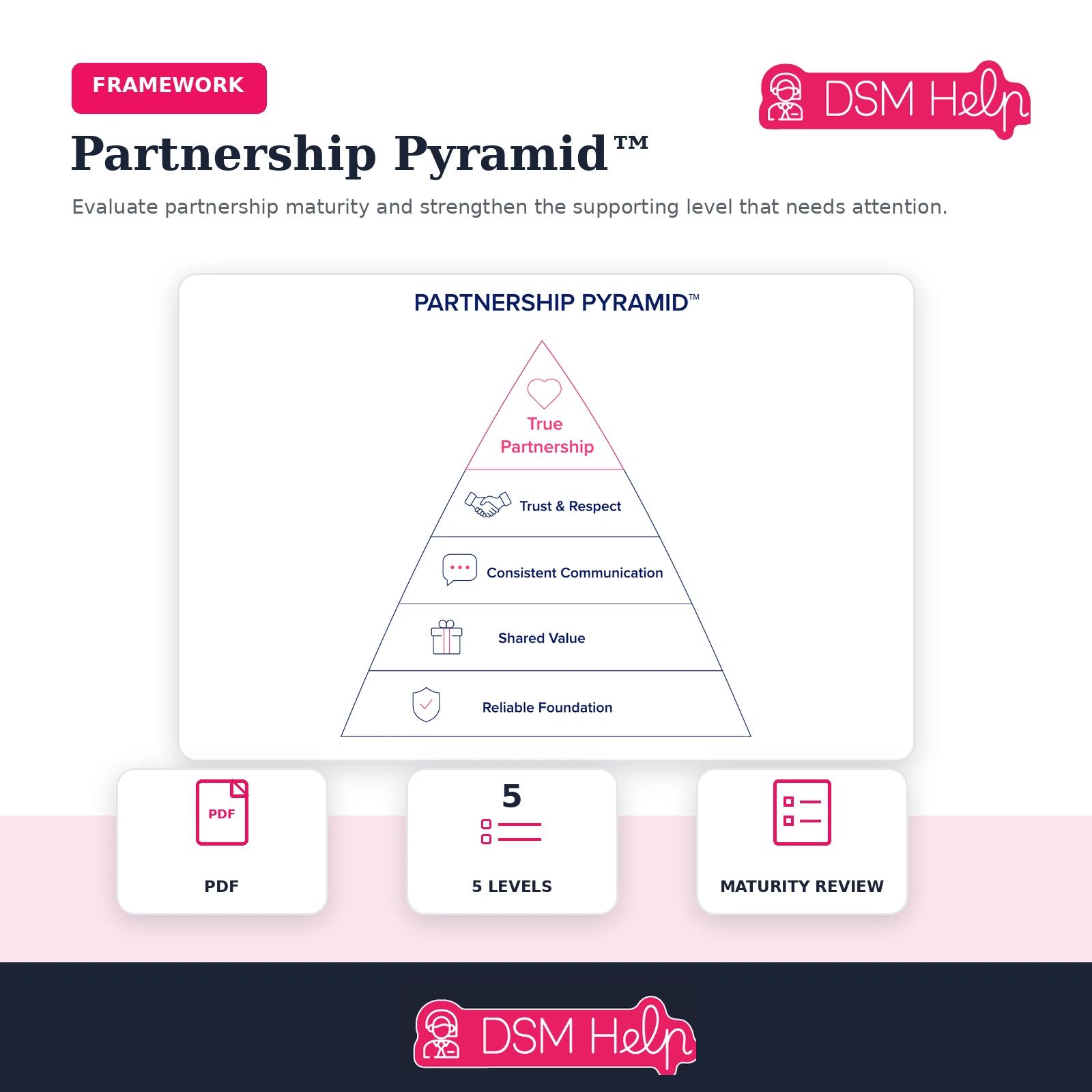
Partnership Pyramid™
Evaluate the maturity and strength of a provider partnership by examining the conditions that support it from the foundation upward.
Categories: Provider Relationships
Audiences: DSM Practice Leaders, Sleep Coordinators, DSM Office Teams, Healthcare Partners
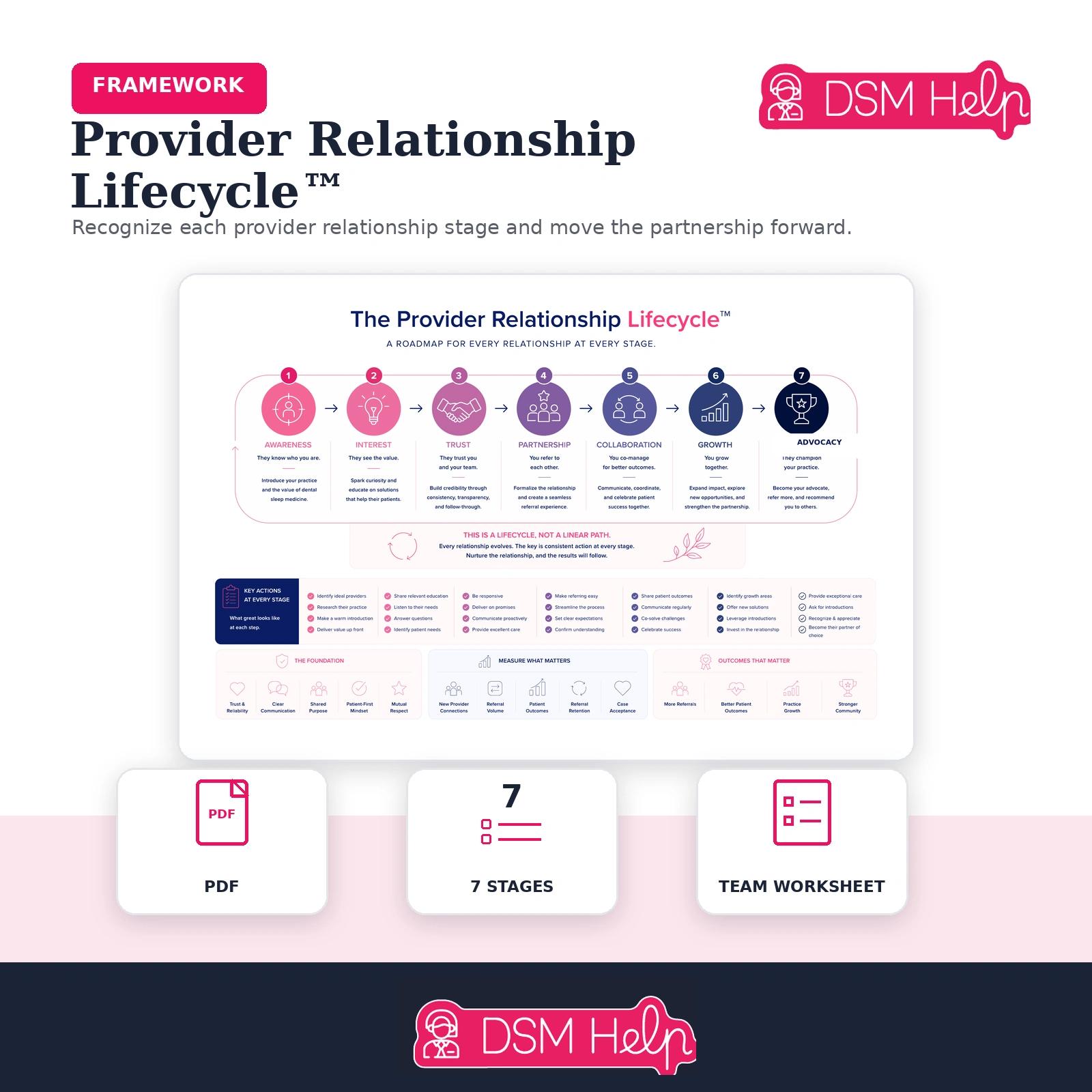
Provider Relationship Lifecycle™
Understand how provider relationships develop over time and identify the right approach for each stage of the partnership.
Categories: Provider Relationships
Audiences: DSM Practice Leaders, Sleep Coordinators, DSM Office Teams
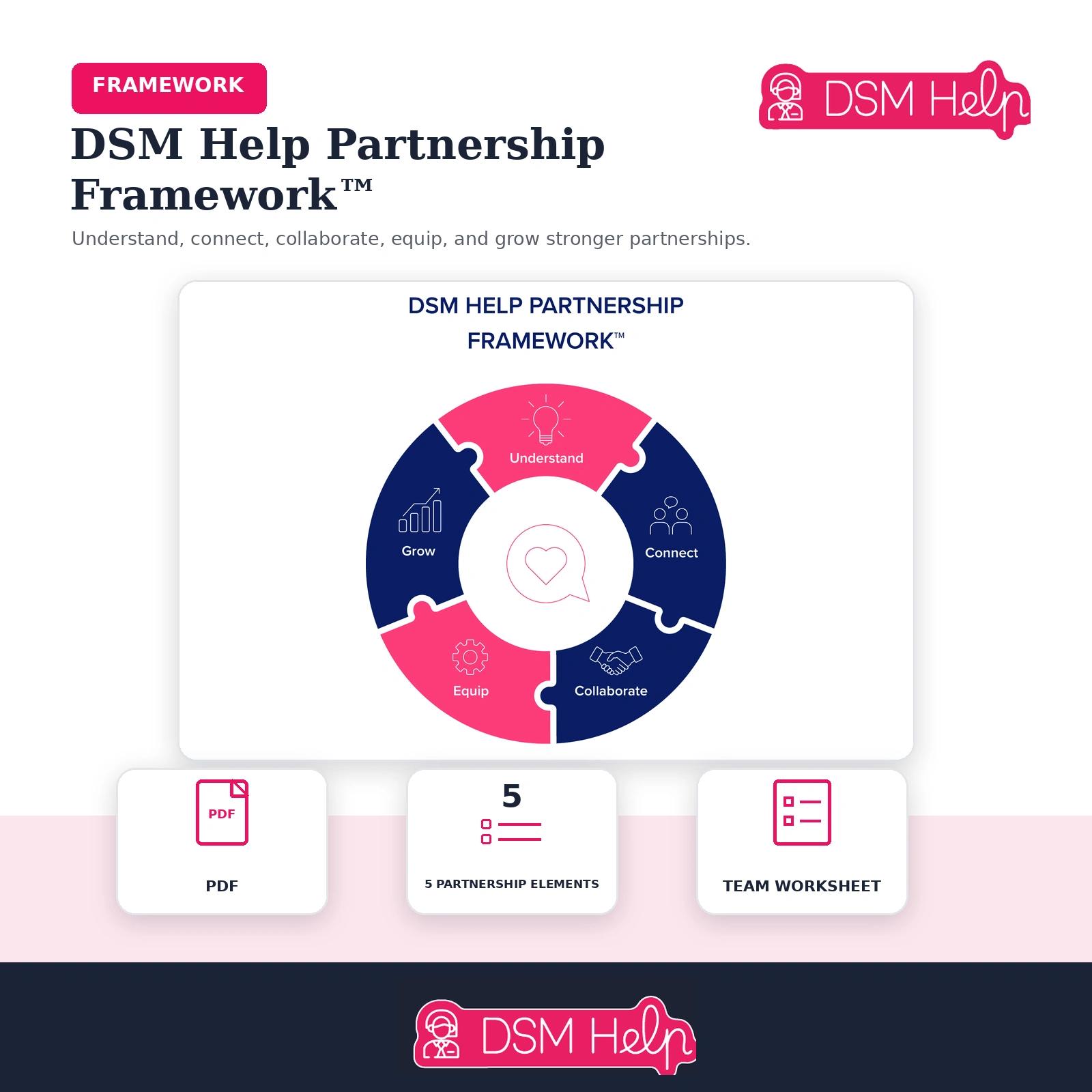
DSM Help Partnership Framework™
A five-part framework that helps teams build stronger, more useful partnerships through understanding, connection, collaboration, practical support, and growth.
Categories: Core Methodology
Audiences: DSM Practice Leaders, Sleep Coordinators, DSM Office Teams, Healthcare Partners, Industry Partners
Start the Conversation
Ready to build partnership momentum?
Keep the next useful action moving.