
DSM Help Methodology™
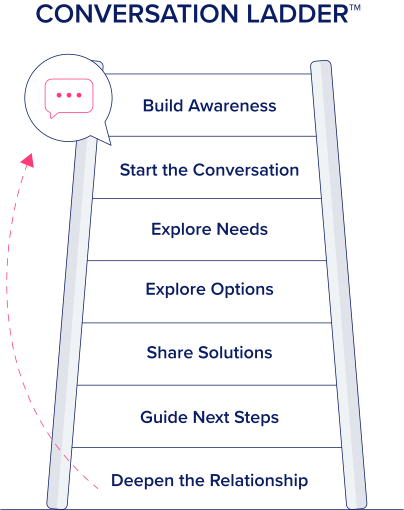
Conversation Ladder™
Move provider conversations from initial awareness toward greater understanding, useful dialogue, clear next steps, and stronger relationships.
Provider Communication • Relationship Development
The Framework
Conversation Ladder™ at a glance
The goal isn’t to present everything. It’s to create the next useful dialogue.
 Expand artwork
Why It Matters
Better referral relationships rarely start with the ask.
They build through a sequence of conversations that earn trust before they ask for action. The Conversation Ladder™ helps teams focus on what the provider needs from the conversation now instead of trying to accomplish everything at once.
Lead with relevance.
Ask before assuming.
Listen for needs.
Share only what fits.
Agree on the next step.
Follow through.
How It Works
Understand the framework.
01
Build Awareness
Create relevance and familiarity before expecting action.
- Introduce DSM relevance to the provider’s patient population
- Offer a concise reason the topic may matter
- Earn permission for a future conversation
02
Start the Conversation
Open a useful two-way dialogue.
- Lead with a question rather than a referral request
- Connect the topic to the provider’s priorities or patients
- Create enough value to continue the dialogue
03
Explore Needs
Understand before recommending.
- Ask about patient, workflow, communication, or education needs
- Listen for barriers, gaps, and priorities
- Confirm what you heard before moving forward
04
Explore Options
Consider possible paths without forcing one answer.
- Discuss relevant approaches and resources
- Clarify tradeoffs, responsibilities, and fit
- Keep clinical judgment and patient choice central
05
Share Solutions
Connect stated needs to relevant support.
- Share only solutions that address the need identified
- Explain the practical value and limits clearly
- Avoid overwhelming the provider with everything available
06
Guide Next Steps
Turn dialogue into a clear, appropriate action.
- Agree on the next step and who owns it
- Make the next action easy to understand and complete
- Set an appropriate follow-up point
07
Deepen the Relationship
Build continuity through follow-through.
- Do what you said you would do
- Close the communication loop
- Use the outcome to create the next useful dialogue
Put It Into Practice
Plan the next useful dialogue.
Use Conversation Ladder™ when your team needs a shared way to understand the current work and choose an appropriate next step.
- 1Identify the current rung using observable evidence.
- 2Choose one question that fits the conversation.
- 3Listen before selecting what to share.
- 4Connect only relevant information or resources.
- 5Agree on a clear next step and owner.
- 6Follow through and reassess the relationship.
What Good Looks Like
- The provider is invited into a two-way conversation rather than receiving a one-sided presentation.
- Questions are used to understand needs before resources or solutions are introduced.
- Information shared is relevant to the provider’s stated need and appropriately scoped.
- The conversation ends with a clear next step when one is warranted.
- Follow-through closes the loop and supports the next useful dialogue.
Use Responsibly
The Conversation Ladder™ supports respectful provider communication. It is not a script for pressuring referrals. Use questions to understand needs, share only relevant and accurate information, respect clinical judgment and patient choice, and follow through on what you commit to.
Explore the Methodology
Continue through the DSM Help Methodology™.
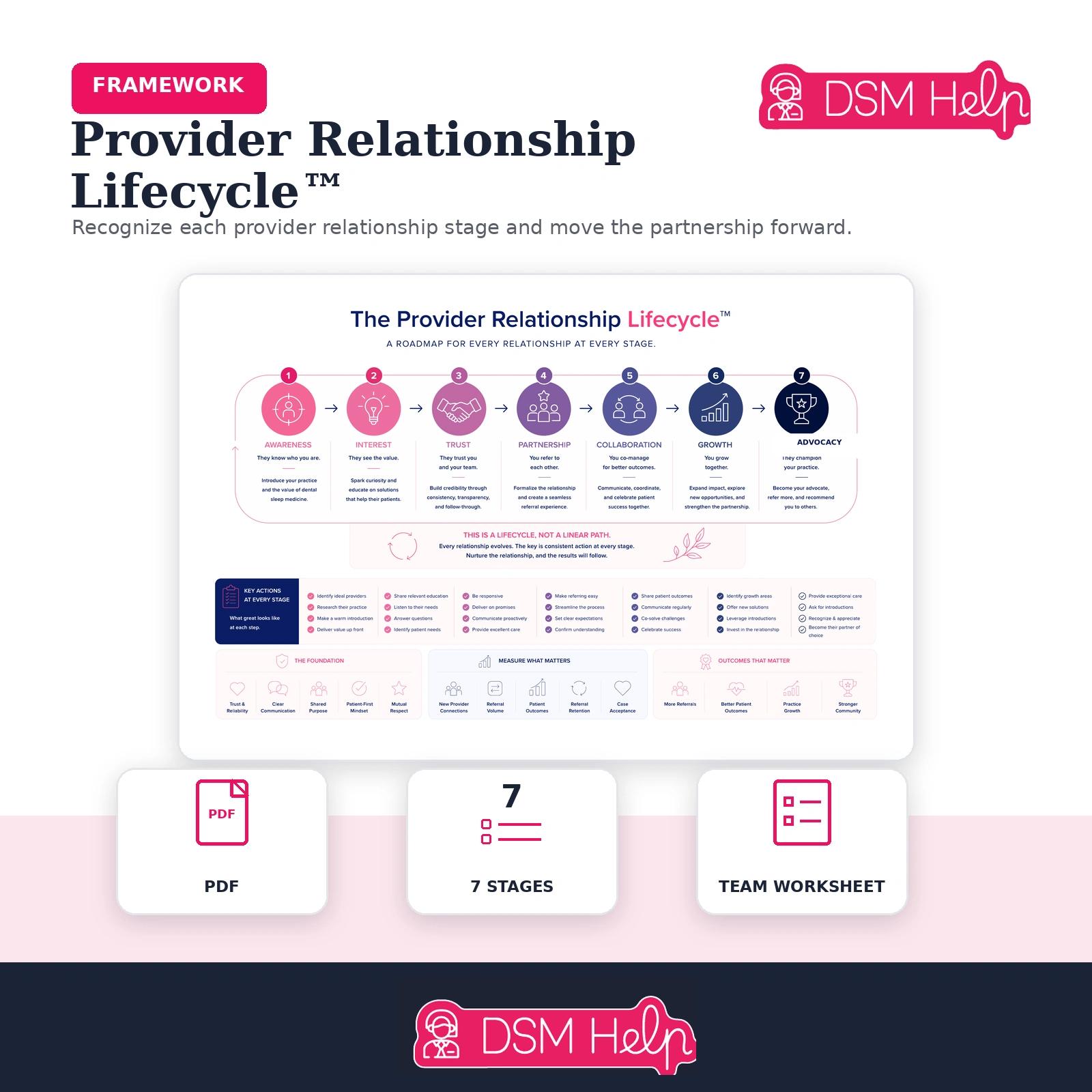
Provider Relationship Lifecycle™
Understand how provider relationships develop over time and identify the right approach for each stage of the partnership.
Categories: Provider Relationships
Audiences: DSM Practice Leaders, Sleep Coordinators, DSM Office Teams
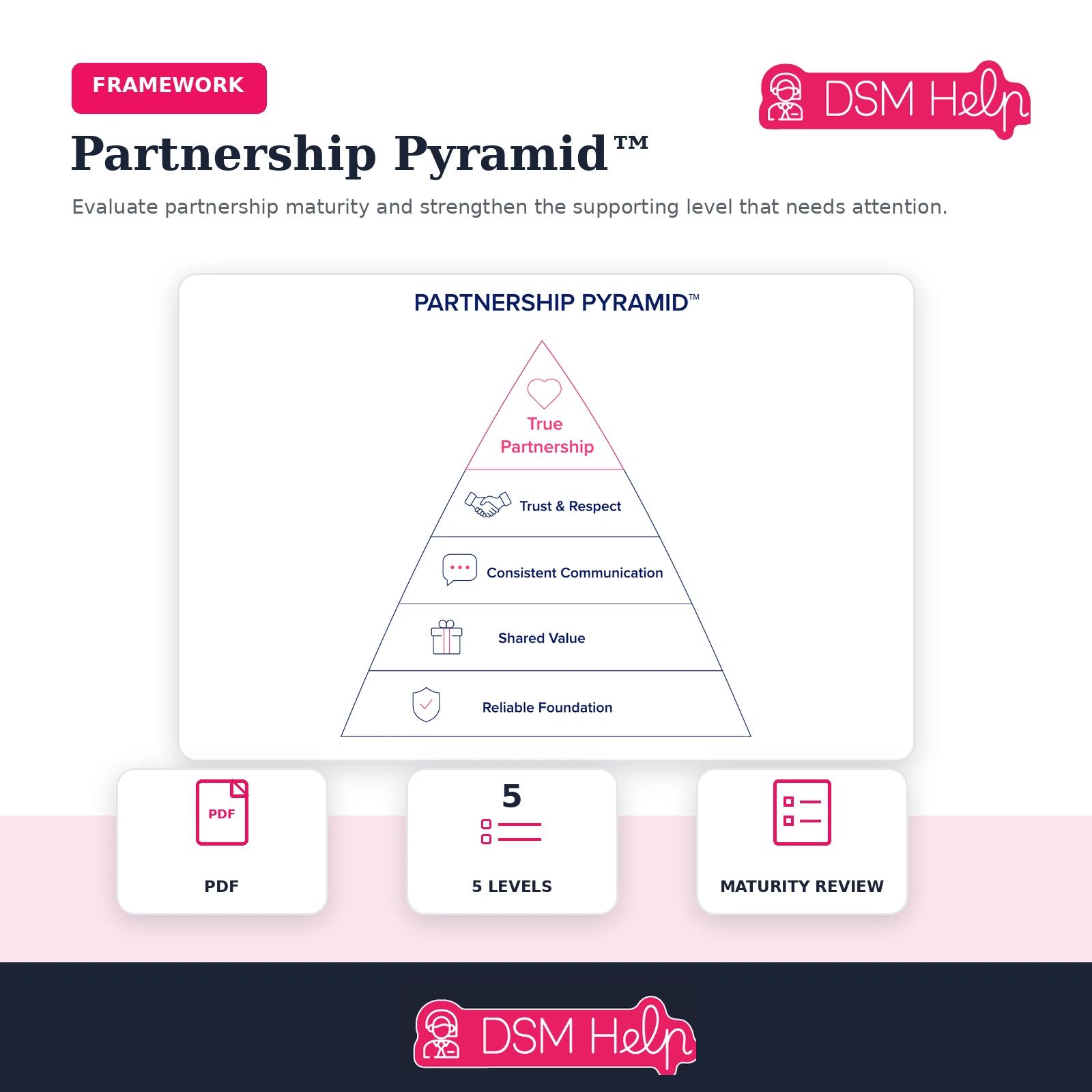
Partnership Pyramid™
Evaluate the maturity and strength of a provider partnership by examining the conditions that support it from the foundation upward.
Categories: Provider Relationships
Audiences: DSM Practice Leaders, Sleep Coordinators, DSM Office Teams, Healthcare Partners
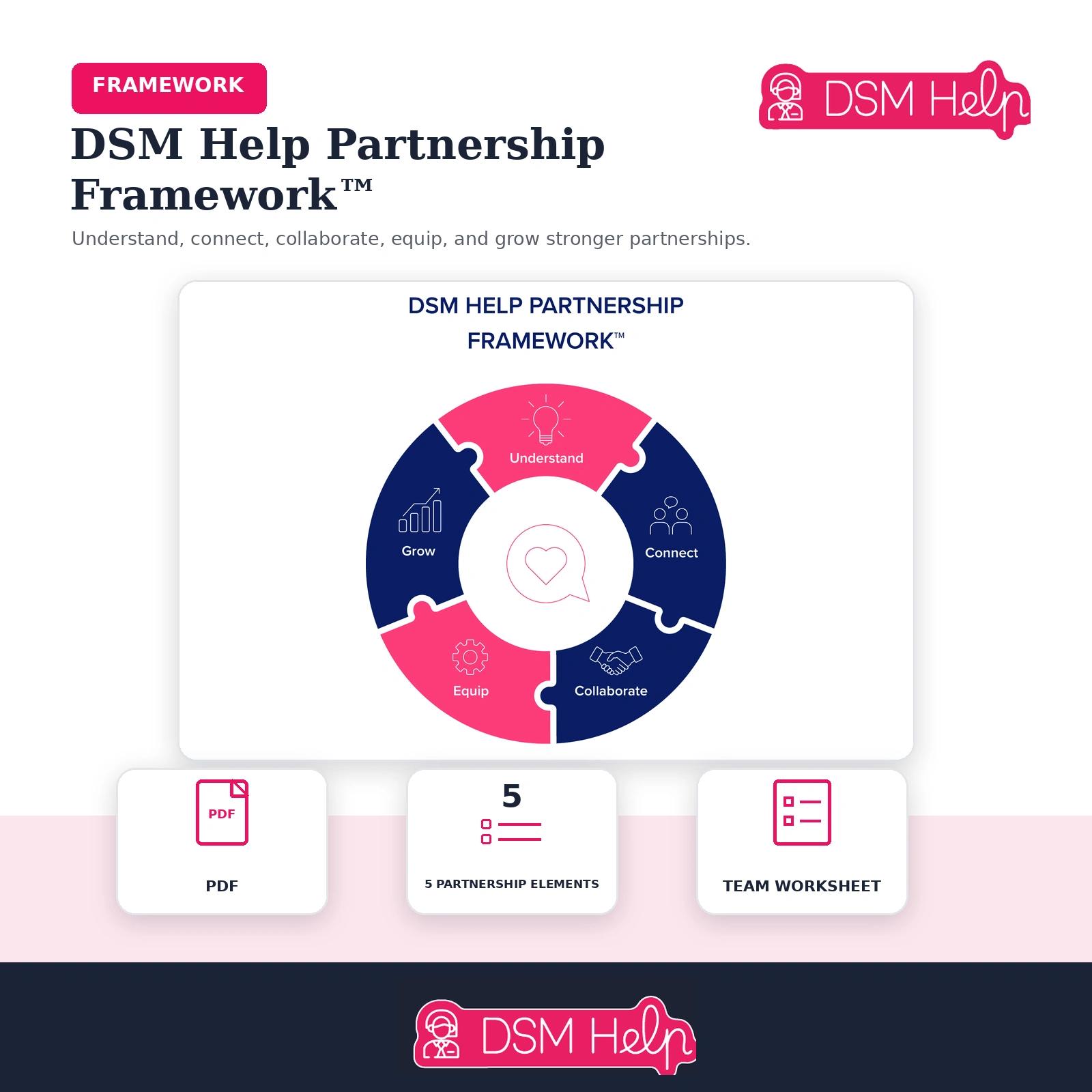
DSM Help Partnership Framework™
A five-part framework that helps teams build stronger, more useful partnerships through understanding, connection, collaboration, practical support, and growth.
Categories: Core Methodology
Audiences: DSM Practice Leaders, Sleep Coordinators, DSM Office Teams, Healthcare Partners, Industry Partners
Start the Conversation
Ready to create the next useful dialogue?
Stronger conversations support stronger provider relationships.