
Insight
A Referral Is Only the Beginning
Build provider relationships through clear acknowledgment, useful updates and dependable follow-through after the referral arrives.
Published November 1, 2026
A provider sends a patient to your practice. The referral arrives, someone starts working on it, and the day moves on. Inside your office, the process may feel active. From the referring office, it may look as though the referral disappeared.
A referral creates a responsibility to communicate. The provider needs enough information to understand what happened next, and the patient needs a clear path forward. Neither should have to reconstruct the process through repeated phone calls.
Agree on the useful update
Start by asking the referring team what information helps them and how they prefer to receive it. Acknowledgment of receipt may be useful immediately. Later, the relevant update may be whether the patient was reached, whether an appointment occurred, or whether a barrier needs attention.
Avoid sending a long report simply because a template has room for one. Make the purpose clear, use the agreed communication channel, and direct patient-specific information through the practice’s established secure process.
Make promises your team can keep
An ambitious follow-up promise is easy to make during an introductory meeting. Keeping it requires a named owner, a workable process and a backup when that person is unavailable. Decide who acknowledges incoming referrals, who tracks unresolved items and who sends the next update.
For example, a referral that cannot move forward should have a recorded reason and a next action. Repeated unsuccessful contact, missing information and a patient’s decision to wait require different responses. A single status marked pending hides those differences.
Review the relationship after the handoff
Choose a small number of recent referrals and follow their paths with the team. Can someone identify the last action, the next action and the person responsible? Would the referring office know the current status? Where did the patient have to carry information between practices?
Use the answers to improve one communication step before adding more outreach. This is a process review, not a reason to blame the person who inherited an unclear workflow.
Put it into practice
At the next provider conversation, ask what an ideal referral update would include. Then test the agreed approach on a manageable group of referrals and review what worked. Relationship development continues after the referral is received. Each clear update gives both teams another opportunity to make the partnership useful.
Related content
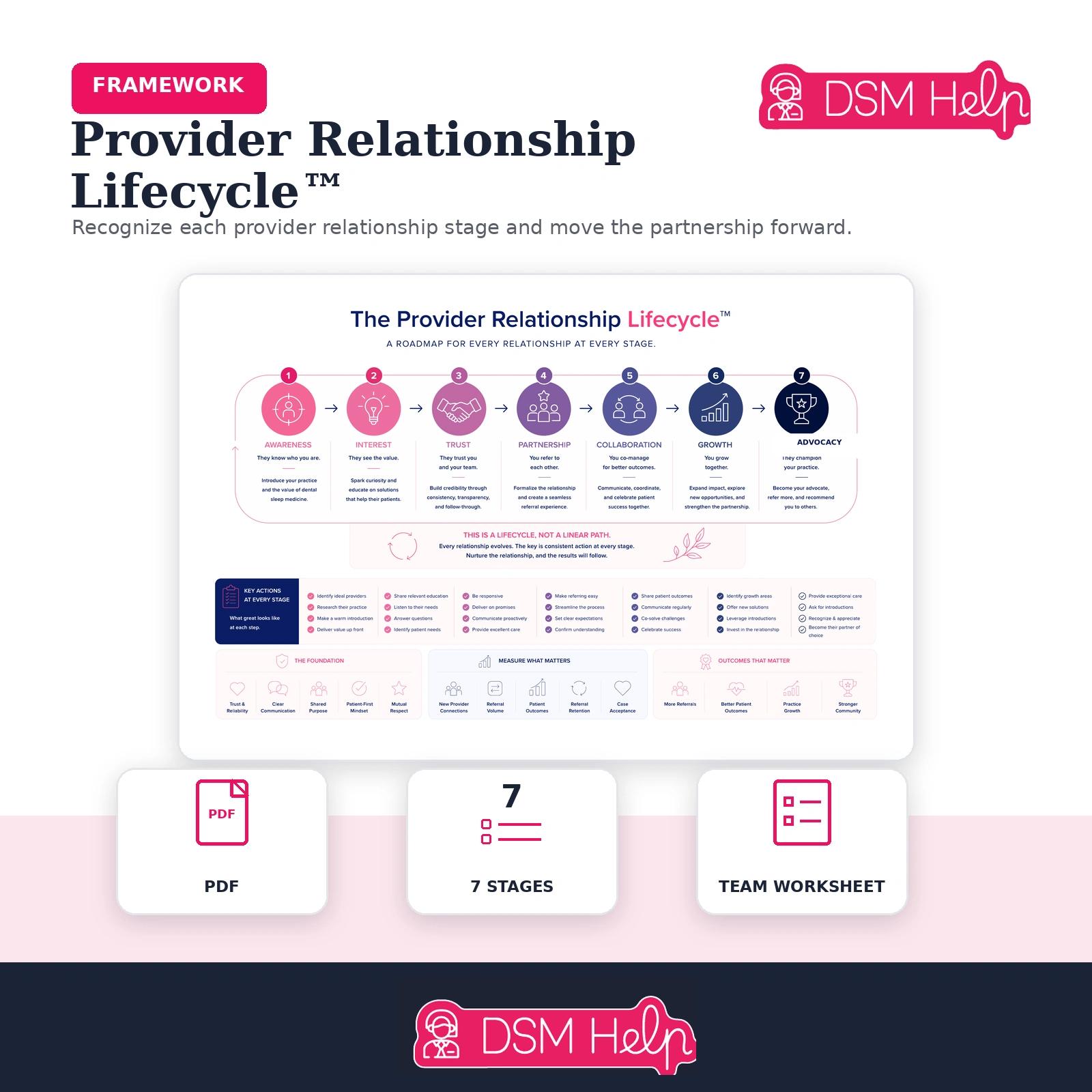
Provider Relationship Lifecycle™
Understand how provider relationships develop over time and identify the right approach for each stage of the partnership.
Categories: Provider Relationships
Audiences: DSM Practice Leaders, Sleep Coordinators, DSM Office Teams
Start Here
Ready to take the next step?
Every meaningful partnership begins with a conversation.